Unlocking the Art of Fabric Printing: A Guide to Techniques
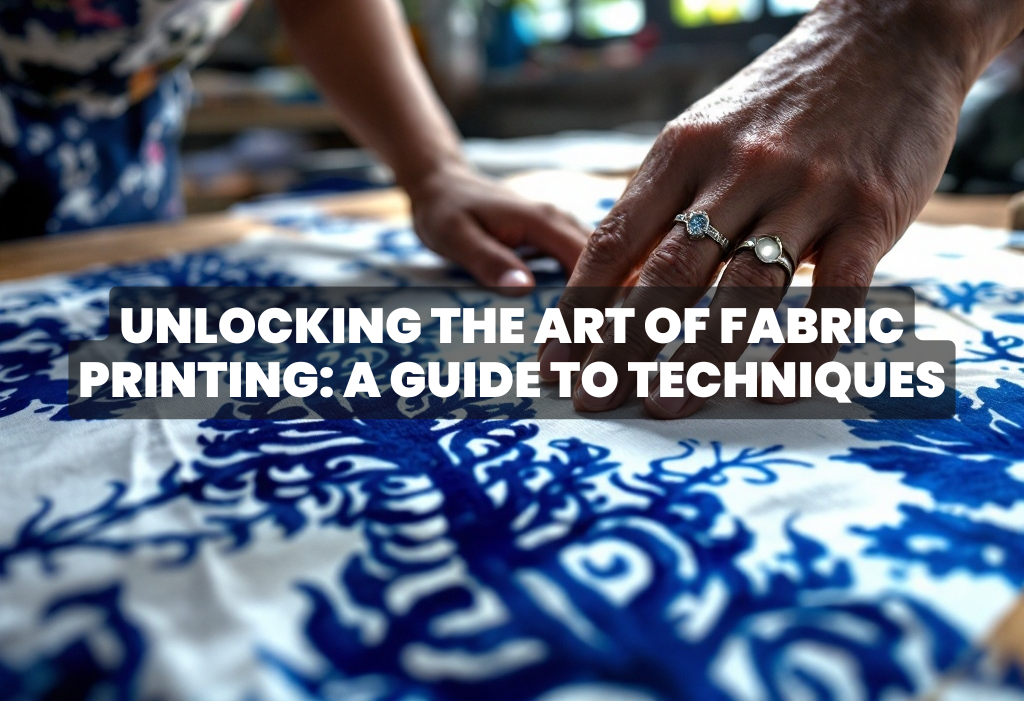
Fabric printing transforms plain textiles into vibrant designs through various techniques you’ll want to master. You’ve got several key methods to choose from: screen printing works great for large runs, digital printing excels with intricate designs, and dye sublimation creates stunning results on synthetic fabrics. Each technique offers unique advantages – screen printing provides cost-effectiveness for bulk orders, while digital printing gives you flexibility for small batches. You’ll find modern innovations like eco-friendly inks and AI-powered design software making the process even more exciting. Let’s investigate how these techniques can bring your creative visions to life.
Key Takeaways
- Screen printing offers vibrant colors and cost-effectiveness for large production runs, making it ideal for commercial textile manufacturing.
- Digital printing enables intricate designs with minimal setup, perfect for small batches and customized fabric patterns.
- Dye sublimation creates permanent, high-resolution prints on polyester fabrics through heat transfer, achieving superior color vibrancy.
- Traditional block printing provides unique, handcrafted designs with low material costs, suitable for artisanal and boutique productions.
- Heat transfer printing works across various fabric types, delivering durable and waterproof results for custom design applications.
What is Fabric Printing?
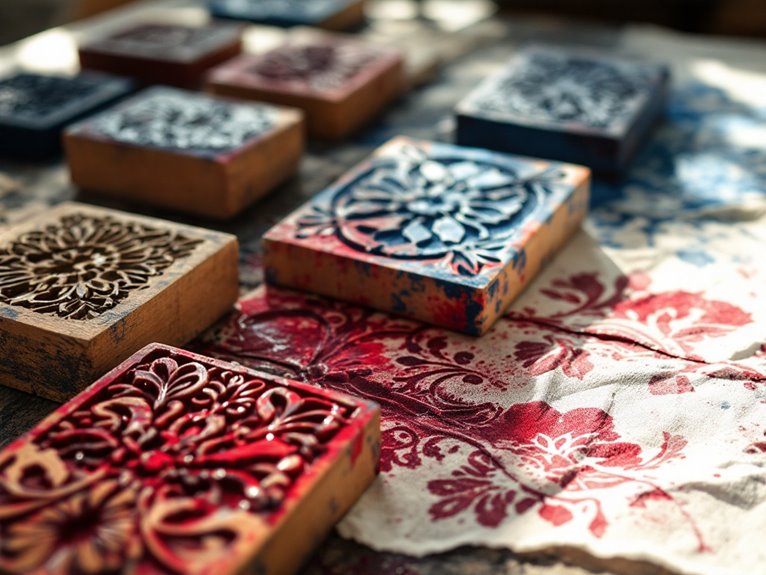
The art of fabric printing transforms plain textiles into vibrant, patterned materials through various design application techniques. You’re about to uncover how this fascinating process brings creativity to life on fabric.
Let’s investigate what fabric printing really means. It’s the method of applying color, designs, and patterns to fabric in a way that’s both artistic and precise.
You might wonder about the technical side. Fabric printing techniques involve transferring dyes or pigments onto textiles using methods like screen printing, digital printing, or heat transfer.
Modern sublimation printers can achieve resolutions up to 3200 DPI for exceptional detail and clarity.
Have you ever noticed how some printed fabrics last longer than others? That’s because different techniques create different bonds between the design and fabric.
Moving on to the practical aspects, you’ll find fabric printing in everything from your favorite t-shirt to your home’s curtains.
Your understanding of fabric printing will help you make better choices for your projects. Whether you’re creating custom designs or selecting printed products, knowing the basics puts you ahead.
The possibilities are endless – from simple repeated patterns to complex photographic images. Think of fabric as your canvas, waiting to showcase your vision.
Why Understanding Fabric Printing Techniques Matters
Whether you’re a designer, crafter, or consumer, understanding fabric printing techniques empowers you to make smarter choices about printed textiles. You’ll be able to select the right products and create better designs when you know what’s possible.
Let’s investigate why this knowledge matters in today’s innovative textile industry. You’ll save time and money by choosing the most appropriate fabric printing methods for your specific needs.
Have you ever noticed how some printed fabrics last longer than others? That’s because different techniques suit different purposes. You can avoid costly mistakes by understanding which methods work best for your project.
You’ll also gain a competitive edge in the market. When you know the strengths and limitations of each printing technique, you can make informed decisions about production methods.
Moving on to the practical benefits, you’ll communicate more effectively with manufacturers and suppliers. They’ll respect your knowledge and provide better service when you speak their language.
You might wonder about sustainability too. Understanding various fabric printing methods helps you choose eco-friendly options that align with your values and market demands.
Modern techniques like DTF printing offer exceptional durability and versatility across different fabric types.
Overview of Fabric Printing Methods
Armed with the importance of understanding fabric printing, let’s investigate the main methods used in today’s textile industry.
You’ll discover that fabric printing methods fall into two main categories: direct and transfer printing.
Direct printing is when you apply designs straight onto the fabric. Think of it like painting directly on a canvas.
Transfer printing involves creating your design on another surface first. It’s similar to using temporary tattoos.
Let’s examine the most common types of fabric printing you’ll encounter:
- Screen printing pushes ink through mesh stencils
- Digital printing uses inkjet technology
- Dye sublimation relies on heat transfer
- Block printing employs carved stamps
- Heat transfer uses special papers and pressure
You might wonder which method works best for your project. Each technique serves different purposes and offers unique advantages.
For example, you’ll want screen printing for large batches of t-shirts. But digital printing might be your go-to for intricate, one-off designs.
Modern DTG printing technology can produce up to 30 garments per hour while maintaining photo-quality results.
Moving on to specific applications, consider how these methods align with your goals. Some work better for natural fibers, while others excel with synthetics.
Understanding these fundamental approaches will help you make informed decisions about your fabric printing projects.
Types of Fabric Printing Techniques
Several key techniques exist in fabric printing: screen printing, digital printing, dye sublimation, heat transfer, and block printing. Each method offers unique benefits for specific projects, from t-shirts to home décor.
Screen Printing
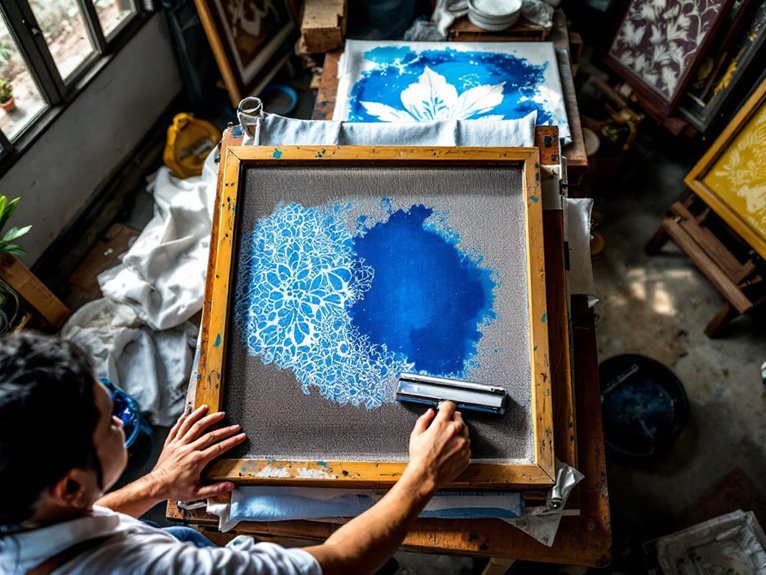
Screen printing stands as one of the most established and versatile fabric printing methods in the industry. You’ll find this technique everywhere, from your favorite band t-shirts to custom tote bags.
Let’s investigate how it works. You’ll use a mesh screen with a stencil of your design, pushing ink through onto the fabric below. Each color requires its own screen, making this process particularly interesting for bold, graphic designs.
Here’s what makes screen printing so innovative:
- You can achieve incredibly vibrant colors that stay bright wash after wash
- The technique allows for specialty inks like metallics, glow-in-the-dark, and puff inks
- You’re able to print on nearly any fabric type, from cotton to polyester blends
You might wonder about the cost-effectiveness. Screen printing becomes more economical as your quantity increases. The initial setup takes time, but once you’re rolling, you can produce hundreds of pieces quickly.
Have you noticed how durable screen-printed designs are? That’s because the ink sits on top of the fabric rather than soaking in. You’ll get crisp, clean results that last for years.
For businesses planning large production runs, screen printing typically yields profits of $2-3 per shirt when producing bulk orders.
Digital Printing (Direct-to-Garment)
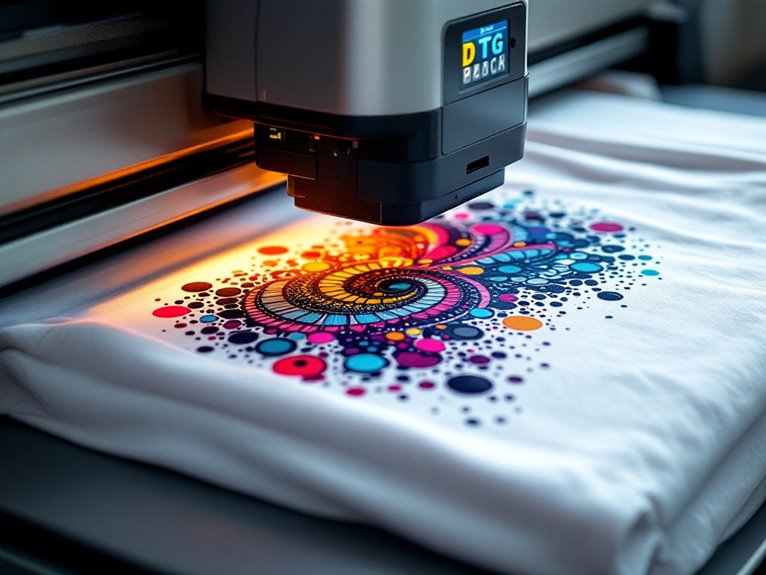
While screen printing excels at high-volume production, digital printing brings a different advantage to fabric decoration. Think of it as your desktop printer’s bigger, more talented cousin – but for fabrics instead of paper.
You’ll find this technique particularly useful when you need intricate, multi-colored designs. The printer directly applies water-based inks to the fabric through tiny nozzles, creating vivid, detailed images.
Let’s investigate how it works for you. Your design gets uploaded to specialized software, then the DTG printer translates it onto the fabric with precision. No screens or complicated setup required.
The advanced PrecisionCore printhead technology enables exceptional color accuracy and image clarity in every print job.
You might wonder about the benefits. Here’s what makes digital printing stand out:
- Perfect for small batch orders
- Handles complex designs with unlimited colors
- Creates soft, breathable prints
- Ideal for photorealistic images
- Minimal setup time
Moving on to practical applications, you’ll find this method shines with custom t-shirts, personalized accessories, and prototype runs. The quality remains consistent whether you’re printing one item or fifty.
Have you noticed the rise of custom merchandise lately? That’s digital printing at work, making personalization accessible and affordable.
Dye Sublimation Printing

When heat meets specialized ink in dye sublimation printing, something remarkable happens – the dye transforms from a solid directly into a gas, embedding itself into the fabric’s fibers.
You’ll find this innovative technique works best with polyester and polymer-coated materials. Think of it as giving your fabric a permanent tattoo at a molecular level.
Let’s investigate how the magic happens:
- Your design gets printed onto special transfer paper using sublimation inks
- Heat and pressure (usually around 375°F) transform the ink into gas
- The gas penetrates the fabric’s fibers, creating vibrant, long-lasting designs
You’re probably wondering about durability – and that’s where dye sublimation printing really shines. Your designs won’t crack, peel, or fade like traditional printing methods.
The results? Think stunning full-color images with incredible detail. You’ll get edge-to-edge coverage that feels soft to touch.
There’s one catch though – you’ll need to stick with synthetic fabrics. Cotton and other natural fibers won’t work with this technique.
Moving on to practical applications, you’ll see dye sublimation dominating sportswear, flags, and promotional items where vibrant, lasting colors matter most.
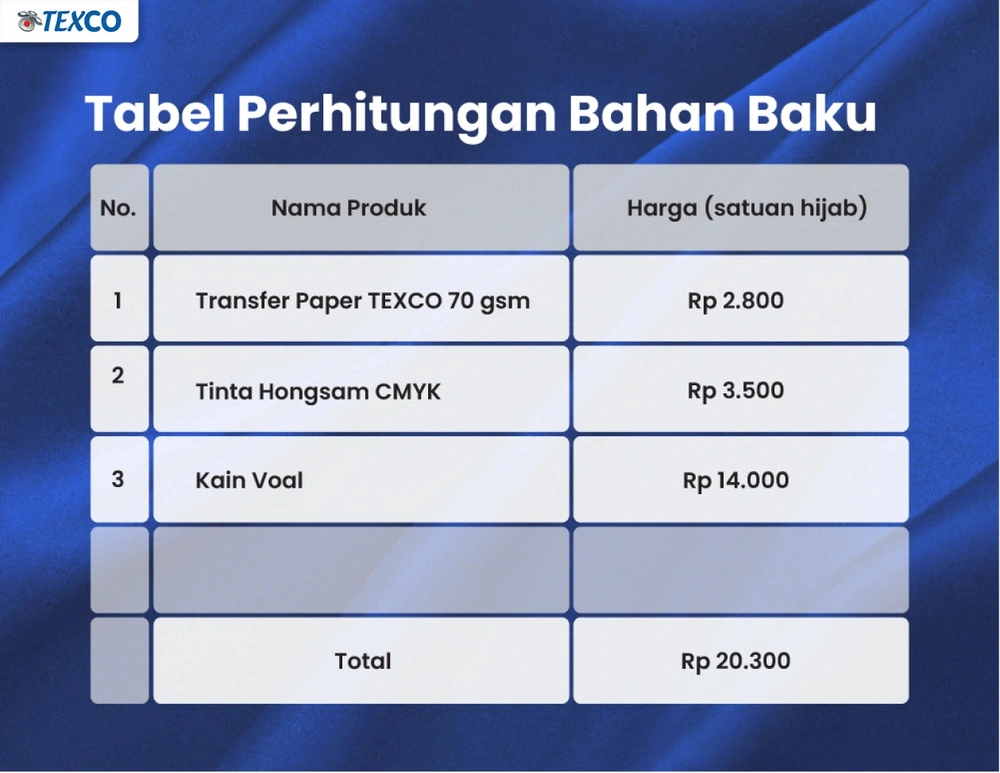
For optimal results, select premium transfer paper that offers excellent ink absorption and quick-drying features to enhance your print quality.
Heat Transfer Printing (Direct To Film)

Unlike dye sublimation’s molecular bonding process, heat transfer printing offers a more versatile approach to fabric decoration. You’ll find this method incredibly adaptable to various fabric types.
Let’s investigate how it works. Your design gets printed onto a special film using specialized ink. Then you’ll coat it with adhesive powder that melts under heat.
You might wonder about the actual transfer process. Using a heat press, you’ll apply precise temperature and pressure to bond the design to your fabric.
Moving on to its versatility, you can create everything from simple text to complex, multi-colored designs. The process works well on cotton, polyester, and even fabric blends.
Have you ever noticed those crisp, professional-looking prints on custom t-shirts? That’s often heat transfer printing at work. You’ll get durable, waterproof results that resist cracking.
The best part? You don’t need massive production runs to make it cost-effective. Whether you’re printing one shirt or fifty, heat transfer printing maintains consistent quality.
Just remember to maintain precise temperature control – think of it as baking cookies, where timing and temperature make all the difference.
Block Printing
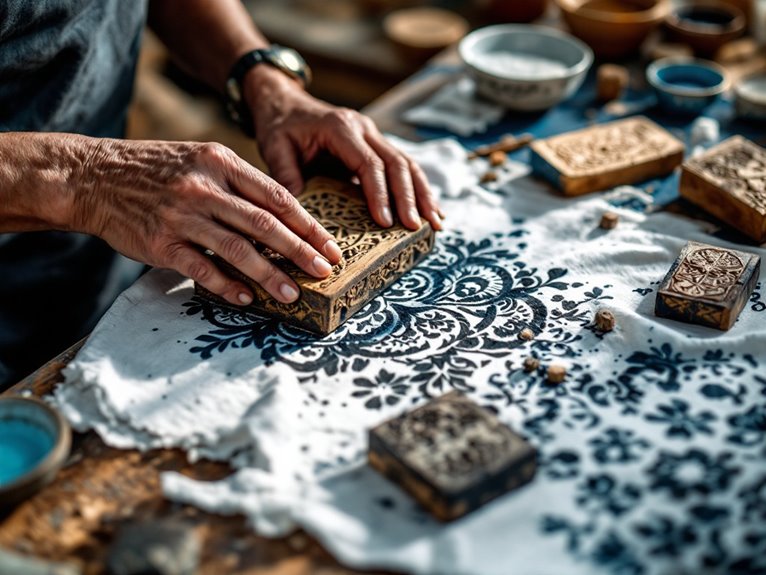
Block printing represents one of the oldest fabric printing techniques still used today. You’ll find this method particularly fascinating if you love hands-on crafting and unique, artisanal designs.
Let’s investigate how block printing works. You’ll use carved blocks made from wood or linoleum to stamp designs onto fabric. Think of it as a giant rubber stamp, but with more artistic flair.
Here are the key steps to create your block-printed masterpiece:
- Carve your design into a block using specialized tools to remove negative space
- Apply fabric ink or paint to the raised surfaces of your carved block
- Press the block firmly onto your fabric with even pressure to transfer the design
You might wonder about the benefits of block printing. It’s perfect for creating one-of-a-kind pieces with a distinctly handcrafted look. Each print carries subtle variations that make your work unique.
Moving on to practicality, block printing works best for simple, repeating patterns. You’ll find it’s incredibly cost-effective since you only need basic materials to get started. Plus, there’s something deeply satisfying about creating prints entirely by hand.
Foil Printing
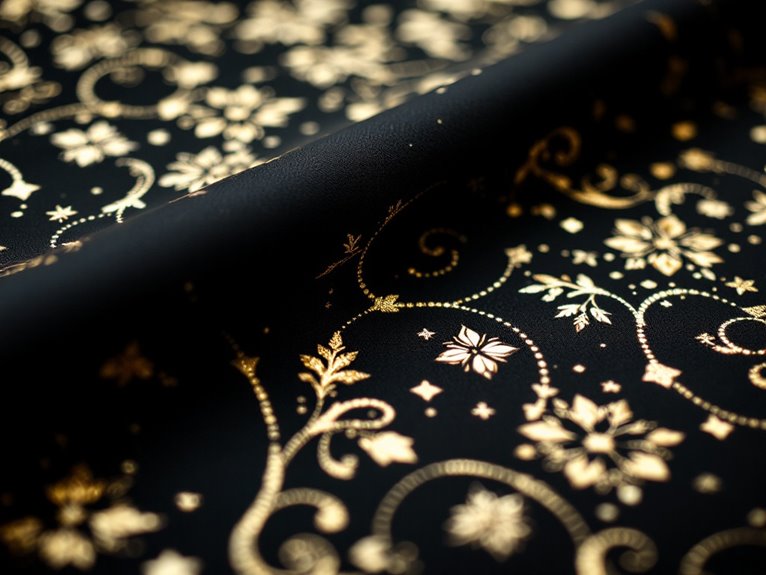
Through a striking metallic finish, foil printing transforms ordinary fabrics into eye-catching statement pieces. You’ll love how this technique adds glamour and sophistication to your textile projects.
Let’s investigate how foil printing works. You’ll start by applying a special adhesive to your fabric in your desired pattern. Then you’ll place metallic foil over the adhesive areas.
Using heat and pressure from an iron or heat press, you’ll transfer the foil onto the fabric. The result? A dazzling metallic design that catches light beautifully.
You might wonder about the versatility of this technique. Foil printing works on most fabric types, though natural fibers like cotton tend to yield the best results.
Moving on to maintenance, you’ll want to handle foil-printed items with care. Dry cleaning is often recommended to preserve the metallic finish.
Have you noticed the variety of foil colors available? From classic gold and silver to bold holographic effects, you can choose from countless options to achieve your design vision.
Remember to test your technique on a small fabric sample first. This helps guarantee you’ll achieve the perfect amount of heat and pressure for your specific project.
Emerging Trends in Fabric Printing
Two major shifts are transforming fabric printing: eco-friendly techniques and technological innovations. Modern solutions include water-based inks and digital printing that enable sustainable, high-quality custom designs with minimal environmental impact.
Eco-Friendly Fabric Printing Techniques
As environmental consciousness grows within the textile industry, eco-friendly fabric printing techniques have emerged as sustainable alternatives to traditional methods. You’ll find these innovations are transforming how we approach textile decoration while protecting our planet.
Let’s examine three key eco-friendly printing methods that are making waves:
- Water-based DTG printing uses non-toxic inks and requires minimal water consumption, making it perfect if you’re looking to reduce your environmental footprint.
- Natural dye sublimation relies on plant-based colorants and heat transfer technology, offering you vibrant results without harmful chemicals.
- Zero-waste screen printing incorporates recycled materials and biodegradable inks, allowing you to create stunning designs while minimizing environmental impact.
You might wonder about the effectiveness of these sustainable options. They’re actually matching or exceeding traditional methods in quality and durability. Many eco-friendly inks now offer excellent color fastness and wash resistance.
Moving on to implementation, you’ll find these techniques are becoming more accessible and cost-effective. They’re particularly suited for small-batch production and custom orders, giving you the flexibility to experiment while staying environmentally responsible.
Technological Innovations
Recent technological breakthroughs have transformed fabric printing, introducing smart automation, precision control, and innovative materials.
You’ll find AI-powered design software that can instantly convert your ideas into print-ready patterns. These smart systems even suggest color combinations and pattern modifications based on trending styles.
Advanced robotic arms now handle fabric placement and printing with microscopic precision. You’re getting consistently perfect results that weren’t possible with manual methods.
Let’s investigate how nanotechnology has changed fabric inks. You can now print designs that change color with temperature or display illuminated patterns through embedded micro-LEDs.
3D printing technology has merged with fabric printing, allowing you to create textured designs with raised elements. Think braille patterns or decorative embossing in a single print run.
Moving on to sustainability innovations, new bio-based inks break down naturally without harmful chemicals. You’ll also find printers that recycle excess ink and minimize water usage.
Have you noticed the rise of augmented reality in fabric printing? You can preview designs on virtual garments before printing, saving time and materials while ensuring perfect results.
These innovations aren’t just changing how we print – they’re redefining what’s possible in fabric design.
Choosing the Right Fabric Printing Method
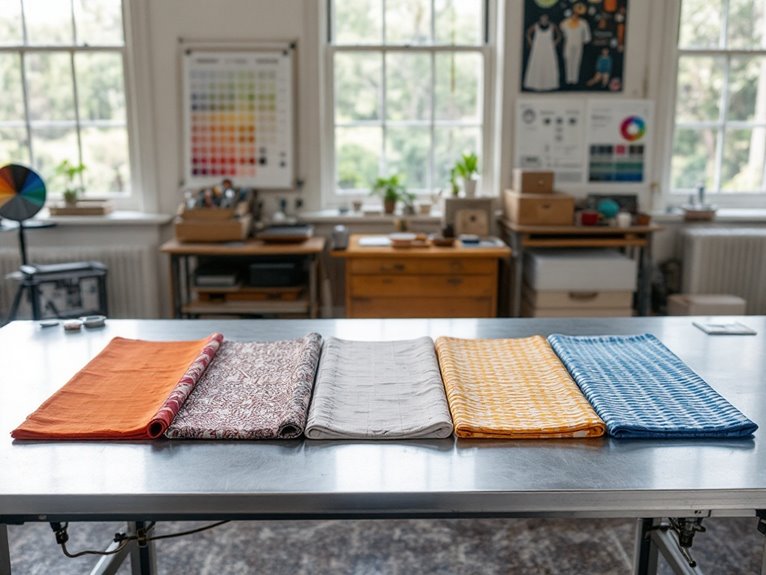
When selecting a fabric printing method, consider your fabric type, design complexity, and order quantity. Screen printing suits large batches with simple designs, while digital printing excels at intricate patterns and small runs. Different techniques suit varying needs, from cost to quality requirements.
Factors to Consider
Selecting the right fabric printing method requires evaluating five key factors that will impact your project’s success. You’ll want to take into account each element carefully to achieve ideal results.
Let’s examine the most vital factors you’ll need to weigh before diving into your fabric printing project:
Order Volume and Timeline
- Small runs (1-50 pieces): Choose DTG printing
- Medium runs (51-200 pieces): Take into account heat transfer
- Large runs (200+ pieces): Opt for screen printing
Your fabric type will significantly influence which printing method works best. Cotton responds well to most techniques, while polyester typically requires dye sublimation.
Your design complexity matters too. You’ll want digital printing for intricate, multi-colored designs. Simple patterns work great with screen printing or block printing.
Evaluate your budget carefully. Screen printing has higher setup costs but lower per-unit prices. DTG has minimal setup fees but costs more per piece.
You might wonder about durability requirements. If you’re creating athletic wear, you’ll need sublimation or screen printing. For decorative pieces, block printing or foil printing could be perfect choices.
Comparison Table of Techniques
To build on your understanding of these key factors, a side-by-side comparison of fabric printing techniques will help you determine the best method for your specific needs.
Let’s investigate how different printing methods stack up in a fabric printing comparison across key metrics:
Screen printing excels at high-volume orders with simple designs, while digital printing shines with intricate, multi-colored patterns in smaller batches.
You’ll find dye sublimation offers exceptional durability and vibrant colors, but it’s limited to polyester fabrics. Heat transfer printing provides versatility across materials but may not match the professional finish of other methods.
Moving on to cost considerations, screen printing becomes more economical as your quantity increases. Digital printing maintains consistent pricing regardless of volume.
Have you ever noticed how block printing creates that distinctive handmade charm? While it’s perfect for artisanal projects, it’s not suitable for large-scale production.
The key is matching your project’s requirements with each technique’s strengths. Consider your fabric type, design complexity, order size, and budget when making your selection.
Remember: there’s no one-size-fits-all solution in fabric printing. Your specific needs will guide you to the ideal method.
Practical Tips for Successful Fabric Printing
Before printing on fabric, carefully prepare your design and select suitable fabric for your technique. Test on samples first and verify material compatibility. Implement quality control measures like color matching, wash testing, and inspection to ensure consistent results.
Design Preparation
When preparing designs for fabric printing, proper file setup and optimization are essential for achieving professional results. You’ll want to verify your artwork meets the specific requirements of your chosen printing method.
Let’s examine the key steps you’ll need to take before sending your design to print:
- Create your design at the correct size and resolution (300 DPI minimum for digital printing, 150-200 DPI for screen printing)
- Convert all text to outlines or curves to prevent font compatibility issues
- Set up proper color spaces (CMYK for digital printing, spot colors for screen printing)
You might wonder about color management. Each fabric printing technique handles colors differently. Confirm to use the appropriate color profile for your chosen method.
Moving on to file formats, vector designs work best for most fabric printing applications. They’ll maintain clarity at any size.
Have you ever noticed how some printed designs look pixelated? That’s often due to poor file preparation. You can avoid this by testing your design at actual print size before production.
Remember to create separate layers for each color when preparing designs for screen printing. This’ll make the separation process much smoother.
For businesses considering DTF printing methods, this innovative technique offers exceptional vibrancy and durability across various fabric types.
Fabric Selection
Since the success of your fabric printing project largely depends on your choice of material, selecting the right fabric requires careful thought of several key factors.
Let’s investigate the most suitable fabric types for printing. Natural fibers like cotton and linen typically accept dyes beautifully and provide excellent color retention.
You’ll want to reflect on the fabric’s weight and weave density. Medium-weight fabrics with a tight weave usually produce the crispest prints.
Have you ever noticed how some fabrics feel smoother than others? That surface texture matters tremendously in printing quality. Opt for fabrics with minimal texture for the clearest results.
Moving on to fiber content, synthetic materials like polyester work best with specific techniques like dye sublimation. Natural-synthetic blends can be tricky – they often require testing first.
Pre-treatment is another vital factor. You’ll need to verify your chosen fabric is properly prepared and free from sizing or finishing agents.
Remember to think about your fabric’s end use. Athletic wear might need moisture-wicking polyester, while home décor could benefit from durable cotton-poly blends.
Let’s not forget shrinkage potential. Pre-wash your natural fibers to avoid any post-print sizing surprises.
Modern DTF printing technology offers exceptional versatility across various fabric types while maintaining high-quality output at 600 dpi resolution.
Quality Control Measures
Quality control stands as the cornerstone of successful fabric printing. You’ll want to maintain consistent standards throughout your printing process to achieve professional results every time.
Let’s examine the key checkpoints you’ll need to monitor for peak fabric printing quality control. Think of yourself as a quality detective, investigating each stage of production with a keen eye.
Here are the critical quality control measures you’ll want to implement:
- Pre-printing inspection: Check fabric for defects, verify proper tension, and confirm color consistency of your materials
- During-printing monitoring: Watch for proper ink saturation, maintain consistent pressure, and check registration marks
- Post-printing evaluation: Test colorfastness, examine print clarity, and verify design alignment
You’ll need to document each quality check systematically. This creates a reliable tracking system for maintaining standards.
Moving on to measurement, you should use calibrated tools to assess print quality. Digital imaging software can help you spot inconsistencies that might escape the naked eye.
Remember to test-wash printed samples before approving full production runs. This simple step can save you from costly quality issues later.
Conclusion
As fabric printing evolves, each printing method offers unique advantages for specific creative and production needs.
You now understand both traditional methods like screen and block printing, and modern techniques like DTG and sublimation. The best choice depends on your project requirements – order volume, design complexity, and fabric type.
The industry is moving toward eco-friendly practices and digital solutions, making fabric printing more accessible and sustainable.
Need high-volume production? Explore direct-to-fabric printers that can produce up to 2000 meters daily.
Frequently Asked Questions
How Long Does Printed Fabric Typically Last Before the Design Starts Fading?
While cheap prints may fade quickly, properly printed fabrics can last 50+ washes when cared for correctly. You’ll get the best longevity from screen printing and dye sublimation, especially if you wash in cold water.
Can I Print on Pre-Dyed or Patterned Fabric Successfully?
Yes, you can print on pre-dyed or patterned fabric, but you’ll need to choose lighter designs that contrast with the background. Digital printing and discharge printing work best for overprinting existing patterns.
What’s the Minimum Equipment Investment Needed to Start Fabric Printing at Home?
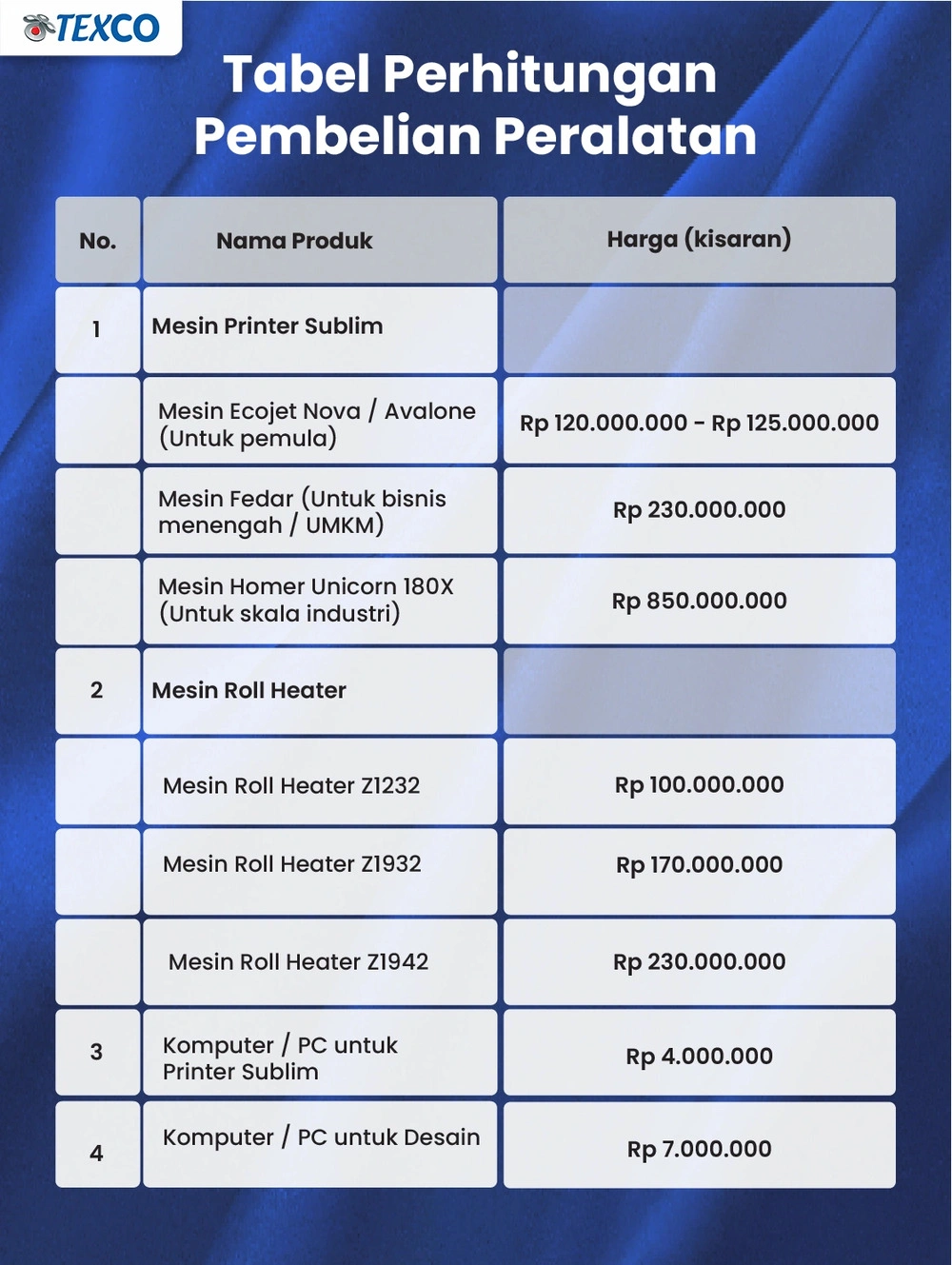
You’ll need a heat press ($200-300), transfer paper ($20), and fabric ink ($30) to start basic heat transfer printing. For screen printing, add screens ($30), squeegees ($15), and basic inks ($50).
How Do Weather Conditions Affect the Fabric Printing Process?
You’ll need to monitor humidity and temperature closely, as high humidity slows drying times and affects ink adhesion, while extreme temperatures can impact curing processes and final print quality. Consider a climate-controlled workspace.
Can Printed Fabrics Be Safely Ironed Without Damaging the Design?
You’ll need to iron printed fabrics according to the printing technique used. Turn garments inside-out and use medium heat for digital prints, while heat transfer and foil prints require extra care to prevent peeling.