Top 5 Direct To Fabric Printers That Transform Your Business
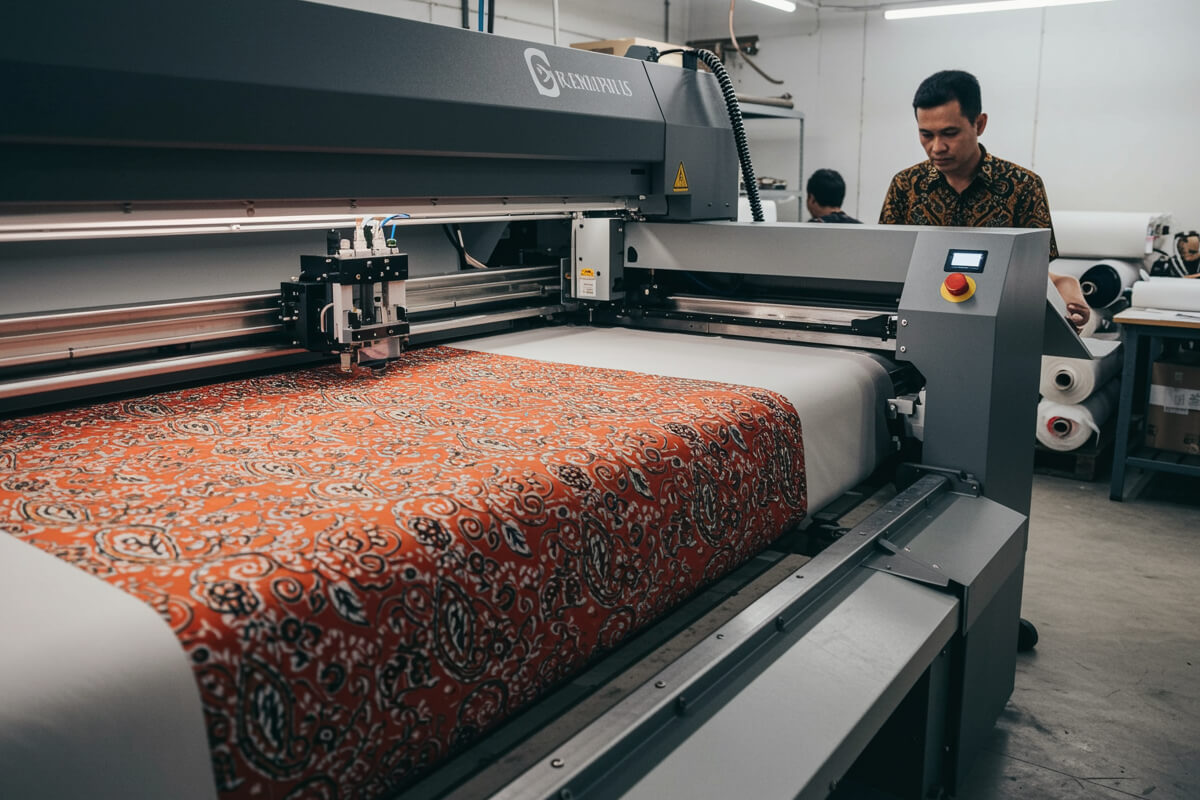
Looking to transform your textile business? The BY.DI Chorus 180X leads the pack with its industrial-scale production and versatile fabric handling, while Epson’s Monna Lisa Evo Tre 32 and 16 models deliver exceptional productivity rates of up to 2000 meters daily. The ML-8000 offers reliable performance with its 155 square meters per hour output, and the ML-64000 rounds out the top choices with advanced color technology. Each printer brings unique advantages in speed, quality, and eco-friendly features – but there’s more to take into account when selecting the perfect machine for your specific needs.
Key Takeaways
- The BY.DI Chorus 180X offers industrial-scale production with Ricoh G6 printheads and comprehensive support, making it ideal for growing businesses.
- Epson Monna Lisa Evo Tre 32 delivers exceptional versatility with eight ink options and 2000-meter daily production capacity.
- The Monna Lisa Evo Tre 16 achieves 404 square meters per hour with superior color quality for high-volume textile printing.
- Epson Monna Lisa ML-8000 combines user-friendly operation with advanced technology, printing 155 square meters hourly with vivid color output.
- Modern DTF printers provide automation features that reduce labor costs by 50% while increasing production efficiency and sustainability.
Direct To Fabric Printer BY.DI Chorus 180X

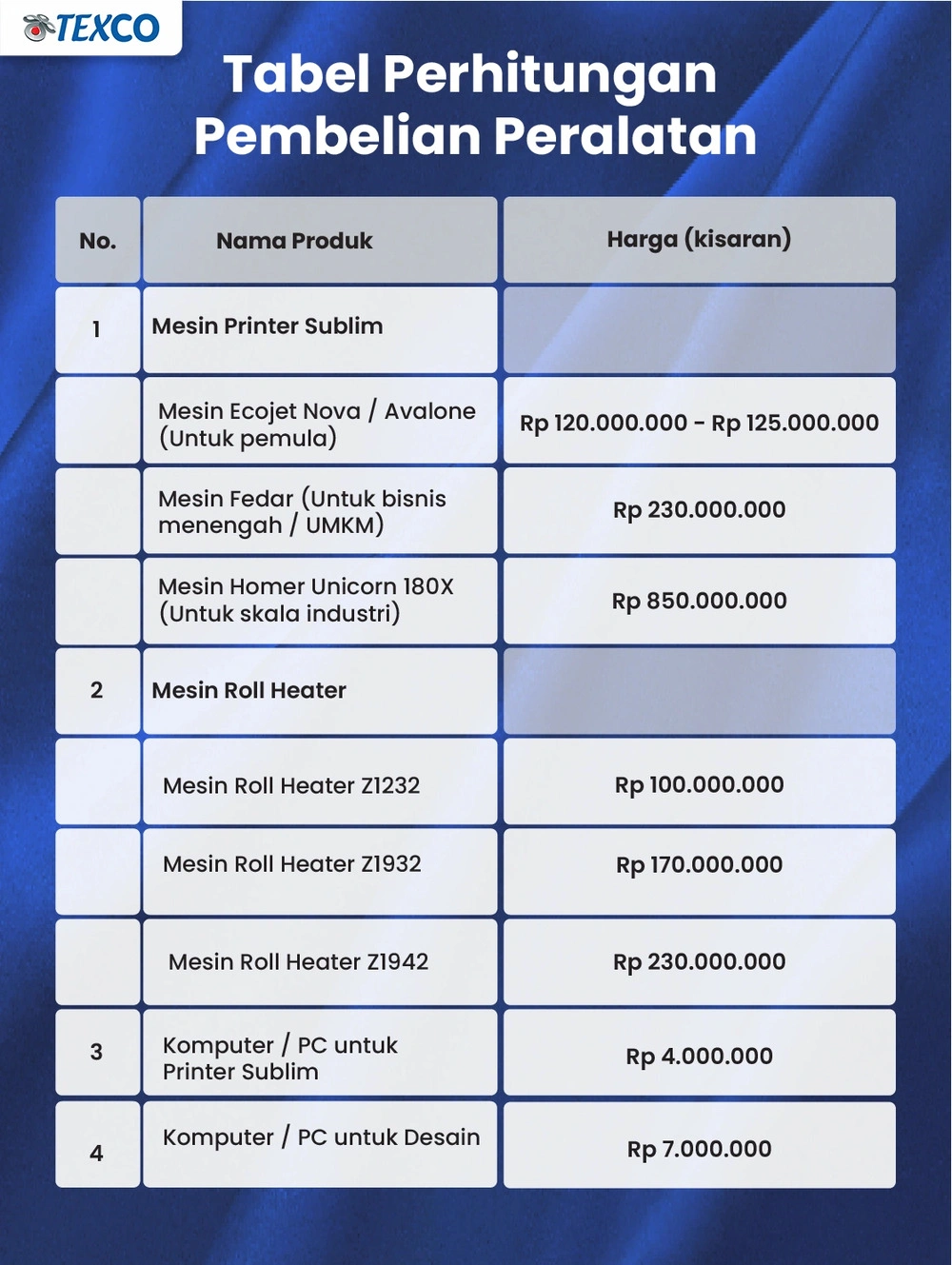
The BY.DI Chorus 180X emerges as a game-changer for textile manufacturers seeking industrial-scale production without breaking the bank. At Rp1,100,000,000, you’re investing in a powerhouse that’ll transform your textile business.
You’ll love how this printer handles multiple fabrics with precision. Cotton, polyester, nylon – they’re all fair game for your creative ventures.
Let’s examine the technical prowess under the hood. Four Ricoh G6 printheads work in harmony to deliver stunning results across a generous 1.8m material area.
Moving on to what makes this printer special: You’re getting vivid colors and detailed prints that’ll make your products stand out. The negative pressure ink control system guarantees you won’t face unexpected disruptions during production.
You might wonder about support – we’ve got your back. With a year of free support, expert training, and real-time WhatsApp assistance, you’re never alone on this journey.
Have you noticed how competitive the textile industry’s becoming? This printer gives you an edge with its efficiency and quality output. You’ll appreciate the free test print and installation service that gets you up and running immediately.
The international certification adds credibility to your operation, while expert consultations help you maximize your investment’s potential.
Best For: Established textile manufacturers and print shops looking to upgrade to digital printing with industrial-scale production capabilities while maintaining reasonable investment costs.
Pros:
- Excellent value for an industrial-grade direct-to-fabric printer with high-quality Ricoh G6 printheads
- Comprehensive support package including training, installation, and ongoing assistance
- Versatile fabric handling capabilities across multiple materials with consistent print quality
Cons:
- Significant initial investment may be challenging for smaller businesses
- Limited print width of 1.95m might restrict certain large-format applications
- Requires dedicated space and infrastructure for industrial operation
Direct To Fabric Printer Epson Monna Lisa Evo Tre 32

Modern textile businesses seeking high-volume production will find the Epson Monna Lisa Evo Tre 32 a game-changing solution, capable of printing up to 2000 meters of fabric daily. You’ll appreciate its dynamic design and dual ink system that keeps you printing longer without interruption.
Let’s examine the impressive technical capabilities that set this printer apart. With PrecisionCore technology and resolution up to 1200 dpi, you’re getting exceptional print quality that’ll make your designs pop.
You might wonder about ink options, and that’s where this printer really shines. It supports eight different ink colors and types, including acid, reactive, disperse, pigment, and sublimation inks.
The printer’s robust build handles fabric rolls up to 100 kg, while maintaining peak performance in temperatures between 20°C and 30°C. You’ll find the Variable-Sized Droplet Technology guarantees consistent quality across all your prints.
Moving on to daily operations, you’ll love how user-friendly this machine is. Daily test prints keep everything running smoothly, and the eco-friendly water-based Ganesta PG-revo ink aligns with sustainable business practices.
When you’re ready to invest, Laysander provides comprehensive support including installation, training, and business profitability calculations. They’ll even help you calculate your return on investment before you commit.
Best For: High-volume textile printing businesses and manufacturers requiring premium quality direct-to-fabric printing with daily production needs of up to 2000 meters.
Pros:
- Exceptional print quality with 1200 dpi resolution and PrecisionCore technology
- Versatile ink compatibility supporting 8 different colors and types (acid, reactive, disperse, pigment, sublimation)
- Eco-friendly operation with water-based inks and efficient production capabilities
Cons:
- Requires specific environmental conditions (20-30°C, 35-80% humidity) for optimal performance
- Significant initial investment and space requirements for industrial-scale operation
Direct To Fabric Printer Epson Monna Lisa ML-64000
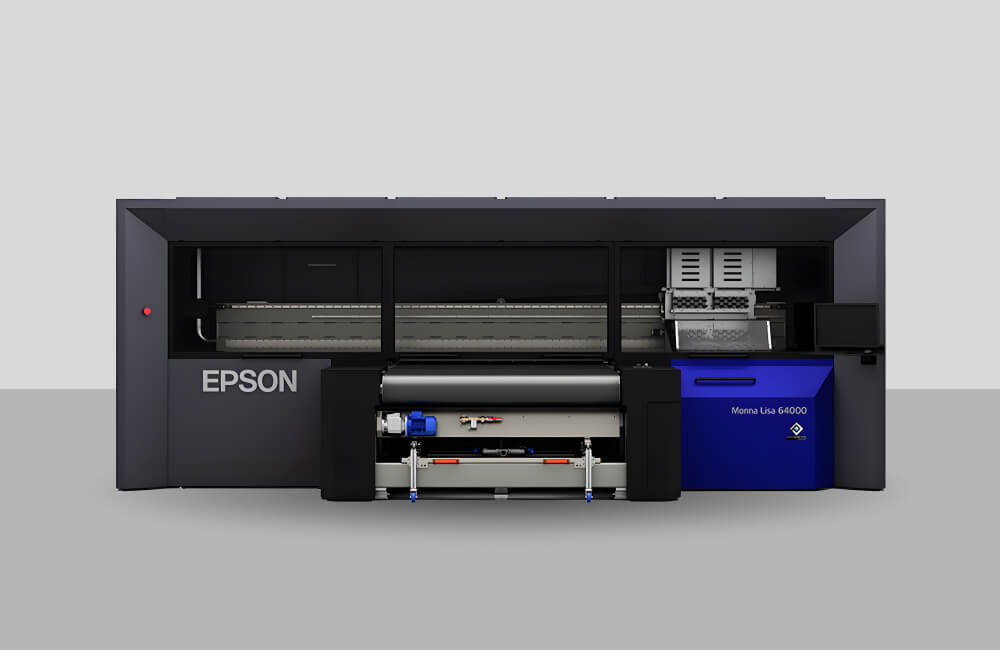
Designed for industrial textile printing operations, Epson’s Monna Lisa ML-64000 stands out with its exceptional productivity and versatility. You’ll find this powerhouse printer transforms your textile business with its advanced Micro Piezo technology.
Let’s investigate what makes this printer special. The 64 PrecisionCore print heads deliver stunning 1200 x 1200 dpi resolution, guaranteeing your designs appear sharp and vibrant on virtually any fabric type.
You might wonder about handling different materials. The thermoplastic conveyor belt securely grips fabrics up to 10mm thick, while the printer handles widths up to 1,800 mm with unlimited length capability.
Moving on to user experience, you’ll appreciate the 9-inch LCD touchscreen that puts control at your fingertips. The automatic cleaning system and nozzle verification technology keep maintenance hassle-free.
Here’s what makes this printer truly innovative. The large ink capacity supports extensive production runs, while specially formulated inks guarantee superior fiber absorption across fabric types.
You’re backed by a comprehensive one-year warranty and free business consultation services. Plus, you’ll receive expert guidance on maximizing profitability with your new printer investment.
Best For: Medium to large-scale textile printing businesses seeking industrial-grade direct-to-fabric printing capabilities with high-resolution output and versatile fabric handling.
Pros:
- Superior print quality with 1200 x 1200 dpi resolution and 64 PrecisionCore print heads
- Versatile fabric handling with 1,800mm width capacity and ability to print on materials up to 10mm thick
- Comprehensive support package including one-year warranty and free business consultation services
Cons:
- Significant initial investment given its industrial-grade specifications
- Large physical footprint requiring dedicated space for industrial operation
Direct To Fabric Printer Epson Monna Lisa Evo Tre 16

Businesses seeking industrial-scale fabric printing will find the Epson Monna Lisa Evo Tre 16 to be a powerhouse solution. You’ll appreciate its impressive productivity rate of 404 square meters per hour, making it perfect for high-volume operations.
Let’s examine the technology that makes this printer stand out. The PrecisionCore print heads deliver brighter colors and high resolution, while the Ganesta ink system guarantees your prints last longer.
You might wonder about the printer’s compatibility. It’ll handle everything from cotton to synthetics and blends, giving you maximum versatility for your projects.
Moving on to the practical aspects, you’ll need adequate space for this industrial heavyweight. The machine measures 4,660 mm wide, 2,390 mm deep, and 1,940 mm high, with a total weight of approximately 4,650 kg including all components.
Maintenance is straightforward but essential. Plan for 3-4 weekly print tests to keep everything running smoothly. Think of it as giving your printer its regular workout routine.
The one-year warranty provides peace of mind, and you’ll get access to business consultation services. It’s like having a printing expert and business advisor rolled into one package.
For peak performance, keep your printing environment between 22°C and 28°C with 35-80% humidity. Your fabric masterpieces deserve perfect conditions.
Best For: Large-scale textile manufacturers and industrial printing operations requiring high-volume, precise fabric printing with exceptional color quality and durability.
Pros:
- Exceptional productivity rate of 404 square meters per hour enables rapid large-scale production
- Advanced PrecisionCore technology delivers superior color brightness and resolution
- Versatile fabric compatibility including cotton, synthetic, and blended materials
Cons:
- Substantial space requirements with large dimensions and heavy weight
- Requires careful environmental control with specific temperature and humidity ranges
Direct To Fabric Printer Epson Monna Lisa ML-8000
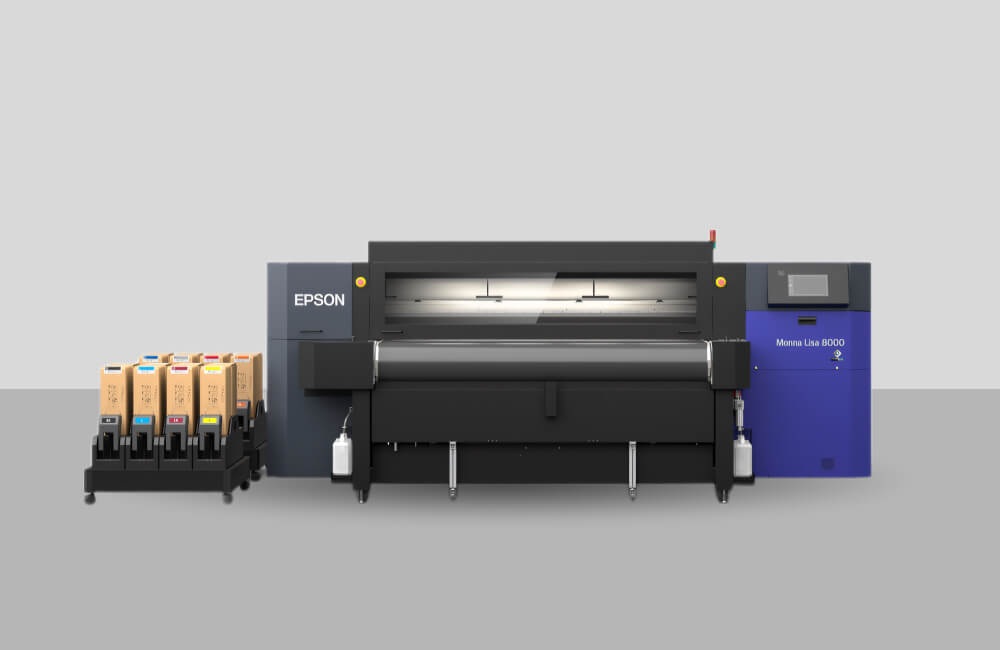
The Epson Monna Lisa ML-8000 stands at the forefront of direct-to-fabric printing technology, delivering exceptional print quality at speeds of 155 square meters per hour.
You’ll love working with the generous 9-inch touchscreen interface that makes operation intuitive and straightforward.
Let’s investigate the impressive technical capabilities. The ML-8000 handles fabrics up to 1,850mm wide and 5mm thick, perfect for your diverse printing needs.
The printer’s advanced Ganesta formulation with 8 print heads creates droplets that are 1.4 times larger than competing machines. This means you’ll get richer, more vibrant prints every time.
Worried about maintenance? The ML-8000’s built-in nozzle verification technology keeps everything running smoothly with just 3-4 routine tests per week.
You’re fully supported with a comprehensive one-year warranty covering both the machine and print heads. Plus, you’ll receive expert installation assistance right at your location.
Moving on to business support, you’ll get free consultations and training sessions to maximize your investment. The team’s just a WhatsApp message away when you need technical help or pricing information.
Think of it as your personal printing powerhouse – it’s not just a printer, it’s your partner in textile innovation.
Best For: Commercial textile manufacturers and large-scale printing businesses seeking high-quality direct-to-fabric printing capabilities with exceptional speed and reliability.
Pros:
- Outstanding print quality with advanced Ganesta formulation and larger ink droplets
- High production capacity with 155 square meters per hour printing speed
- Comprehensive support package including installation, training, and ongoing consultation
Cons:
- Significant initial investment for equipment and setup
- Limited to fabric thickness of 5mm, which may restrict some specialty applications
Factors to Consider When Choosing a Direct-to-Fabric Printer
When you’re investing in a direct-to-fabric printer, you’ll need to weigh several critical factors that can make or break your printing success. You’ll want to examine core elements like print quality, production speed, fabric compatibility, cost-effectiveness, and ink system capabilities to find the perfect match for your needs. These key considerations will help you navigate through the available options and choose a printer that’ll serve as a reliable workhorse for your textile printing business.
Print Quality and Resolution (Image Clarity)
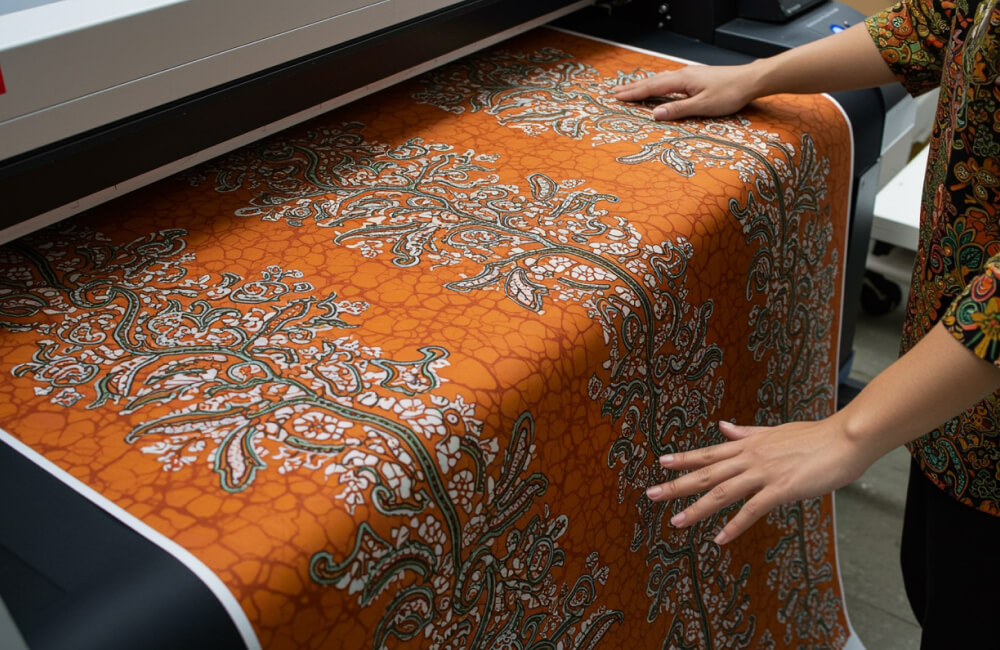
Understanding print quality and resolution stands as an important factor when selecting your direct-to-fabric printer, as these elements directly impact the final product’s professional appearance.
You’ll want to focus on two key specifications: DPI (dots per inch) and color depth. Most high-quality fabric printing requires at least 600 DPI for crisp, clear images.
Let’s investigate how resolution affects your prints. Higher DPI means smoother gradients and sharper details, especially significant for intricate patterns or photographic designs.
Have you ever noticed how some printed fabrics look pixelated up close? That’s what you’ll avoid with proper resolution settings. Your direct to fabric printing should maintain clarity even under close inspection.
Color accuracy plays a critical role too. Look for printers offering at least 8-bit color depth per channel, ensuring smooth color transitions and vibrant output.
Moving on to practical applications, you’ll need different resolution settings for various fabric types:
- Fine silk: 1200+ DPI
- Cotton: 600-900 DPI
- Polyester: 600+ DPI
Remember that higher resolution typically means slower printing speeds. You’ll need to balance quality requirements with production demands.
Speed and Production Efficiency (Output Rate)
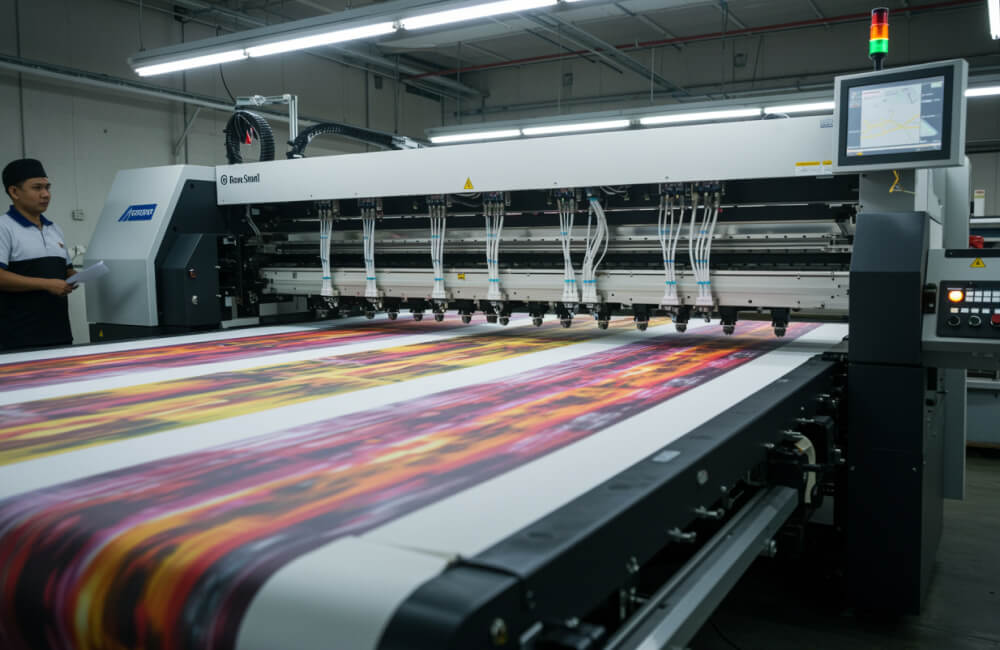
Production speed goes hand in hand with print quality, forming a key trade-off in direct-to-fabric printing. You’ll need to find the sweet spot between maintaining excellent output while meeting your production demands.
The best direct to fabric printers offer speeds ranging from 100 to 1,000 square meters per hour. Your choice will depend on your business scale and customer requirements.
Industrial fabric printers equipped with multiple printheads can dramatically boost your production rates. You’re looking at potential outputs of up to 4,000 square meters in a single shift.
Let’s investigate how speed affects your bottom line. Faster printing means you can take on more orders and reduce labor costs per project.
You might wonder about maintaining consistency at high speeds. Modern printers use advanced feed systems and tension controls to guarantee uniform results even at maximum output.
Consider your workflow demands when selecting print speeds. A small boutique might excel with 100-150 square meters per hour, while large-scale operations need industrial-grade machines pushing 800+ square meters.
Remember that faster isn’t always better. Your specific business model should dictate the ideal speed-to-quality ratio you’ll need.
Fabric Compatibility (Material Range)
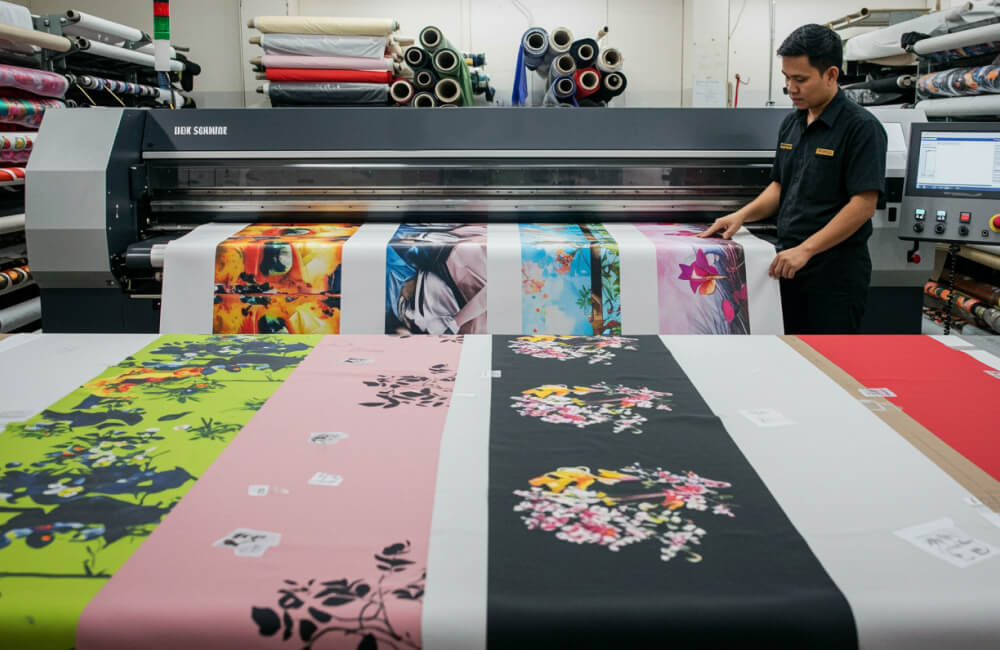
Fabric versatility stands as an essential factor in selecting your direct-to-fabric printer, as different machines support varying material types and thicknesses.
Modern digital fabric printers can handle an impressive range of textiles. You’ll want to verify your chosen printer works with your primary materials.
Let’s investigate the most common fabric compatibilities you should look for in today’s fabric printing technology:
- Natural fibers (cotton, silk, linen, wool)
- Synthetic materials (polyester, nylon, spandex)
- Blended fabrics (poly-cotton, silk-wool blends)
- Specialty textiles (velvet, denim, canvas)
You might wonder about fabric weight capabilities. Most professional direct-to-fabric printers handle materials from 30 to 450 GSM.
Consider whether you’ll need to print on both light and dark fabrics. Some printers excel at one but struggle with the other.
Temperature sensitivity matters too. Your printer should adjust its settings based on fabric heat tolerance.
Moving on to pre-treatment requirements, certain fabrics need specific preparation for ideal print adhesion. Look for printers offering automated pre-treatment features.
The best machines adapt to various textile thicknesses without manual adjustments. This flexibility saves you time and reduces material waste.
Cost and ROI (Investment Value)
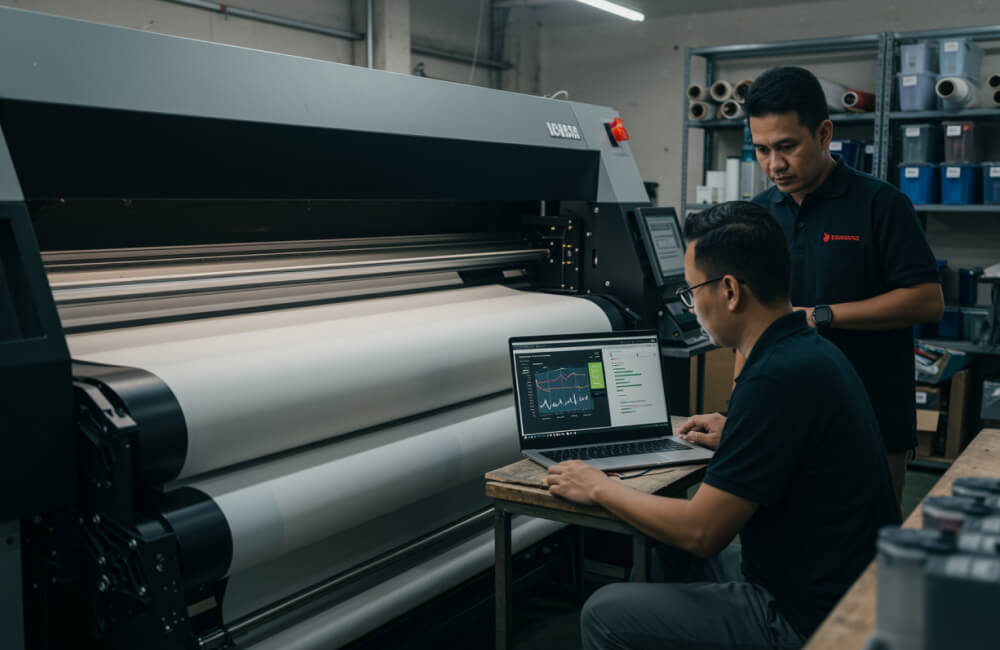
When evaluating a direct-to-fabric printer, your initial investment and long-term returns deserve careful analysis. The market shows that entry-level fabric printing machines start around $15,000, while industrial models can exceed $100,000.
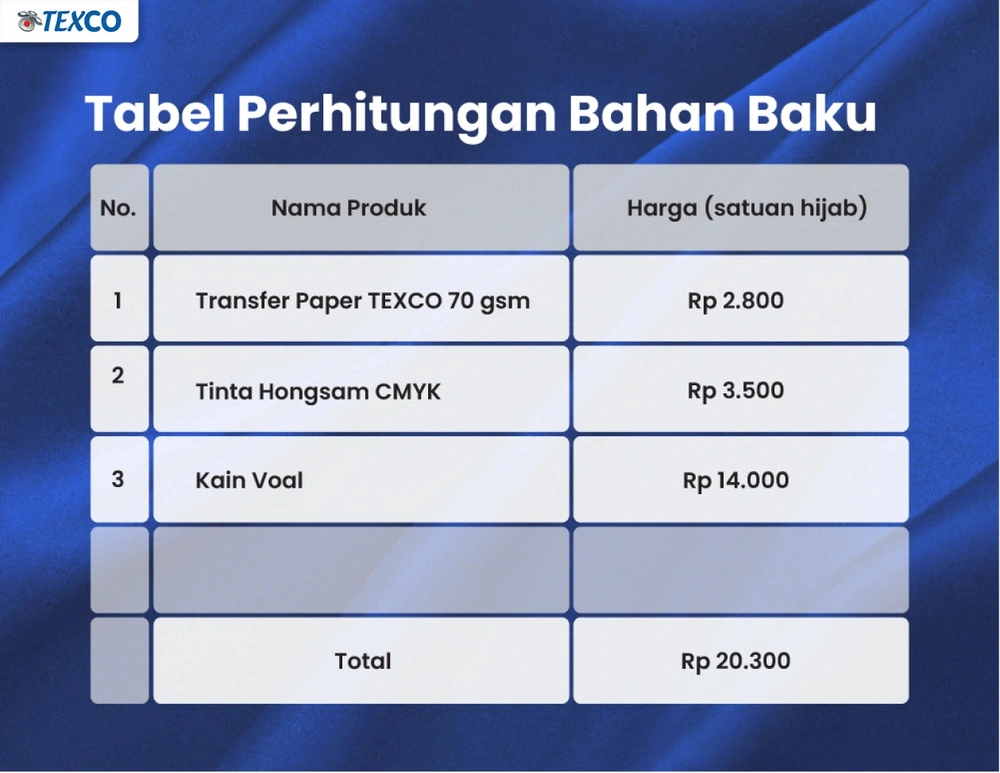
You’ll need to contemplate more than just the printer’s price tag. Operating costs typically range from $0.20 to $1.50 per square foot, depending on ink consumption and fabric type.
Let’s investigate the ROI timeline. Most direct to garment printers pay for themselves within 12-18 months when operating at 60% capacity or higher.
Your maintenance costs will vary by usage. Plan for regular printheads ($500-1,500 annually) and periodic system updates ($1,000-2,000).
Production speed directly impacts your earning potential. Modern direct-to-fabric printers can process 100-150 square meters per hour, letting you handle multiple orders efficiently.
Reflect on your market positioning. Premium direct-to-fabric printers command higher prices but deliver superior quality that justifies charging 30-40% more per project.
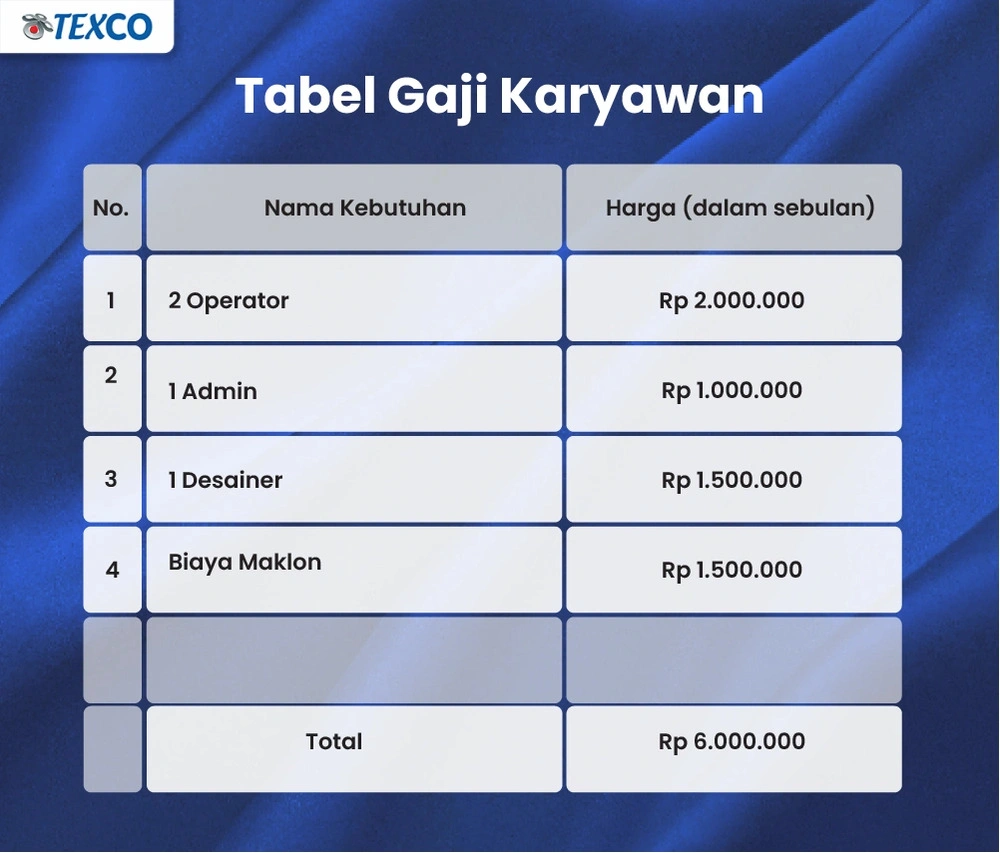
You’ll find that automation features, while increasing upfront costs by 20-30%, can reduce labor expenses by up to 50% annually. This investment often pays off within the first two years.
Ink System (Color Management)
Beyond the initial investment calculations, your printer’s ink system will shape both print quality and operating costs. Grasping color management is essential for precision fabric printing success.
You’ll want to focus on two main ink types: reactive dyes for natural fibers and disperse inks for synthetics. Each serves specific purposes in fabric printing for custom apparel.
Let’s investigate color gamut capabilities. Modern direct-to-fabric printers offer expanded color ranges with 8-color systems that include fluorescents and metallics. Your prints will pop with vibrant, accurate hues.
Have you noticed how some prints fade after washing? That’s where ink quality matters. Premium inks might cost more initially but provide better color fastness and durability.
Moving on to efficiency, look for printers with smart ink monitoring systems. They’ll help prevent wastage and maintain consistent output quality.
You’ll need to evaluate ink consumption rates too. Advanced systems use precision droplet technology that reduces ink usage by up to 30% compared to traditional methods.
Now that we recognize the basics, don’t forget about color profile management. Modern RIP software helps maintain color accuracy across different fabric types and printing conditions.
Maintenance Requirements (Operational Efficiency)
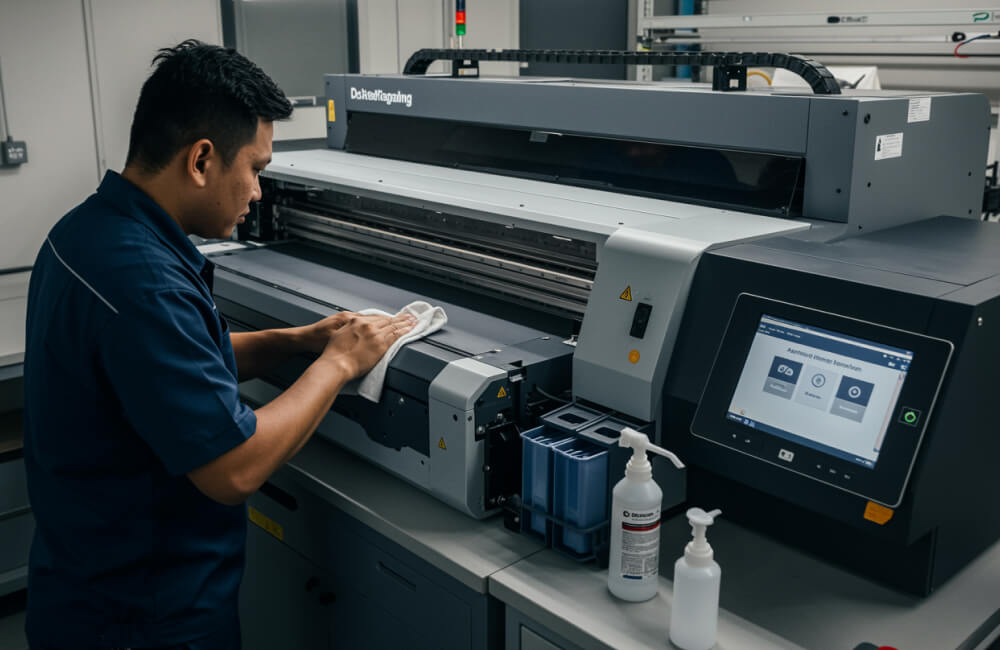
Since regular maintenance directly impacts your printer’s longevity and performance, understanding the upkeep requirements before investing is essential. Your fabric printing equipment needs consistent care to deliver superior results.
You’ll need to perform daily printhead cleaning to prevent clogging. This simple routine takes about 5-10 minutes at the start of each workday.
Let’s examine the weekly maintenance schedule. You’ll want to clean the ink delivery system and wipe down external components to prevent dust accumulation.
Moving on to monthly tasks, your direct-to-fabric printers require thorough cleaning of the capping station and wiper blade. This prevents dried ink buildup that could affect print quality.
Have you ever noticed how some printers need less maintenance than others? Modern systems often feature automated cleaning cycles that reduce manual intervention.
You’ll appreciate that newer models include maintenance reminder systems. These smart alerts help you track when it’s time for specific upkeep tasks.
Consider the cost of maintenance supplies in your budget planning. Most manufacturers recommend using their branded cleaning solutions for superior results.
Remember that preventive maintenance saves money in the long run. It helps avoid costly repairs and extends your printer’s lifespan.
Environmental Impact (Sustainability)
When evaluating direct-to-fabric printers, sustainability features should rank among your top priorities, as these machines can significantly impact your environmental footprint.
Today’s eco-friendly fabric printers can reduce water consumption by up to 95% compared to traditional methods. You’ll find this especially important if you’re committed to green business practices.
Advanced fabric printing technology has transformed waste management in textile production. Your printer choice can help minimize fabric waste and reduce chemical usage significantly.
Let’s investigate the energy efficiency aspect. Modern direct-to-fabric printers consume up to 94% less energy than conventional printing methods. That’s like switching from a power-hungry desktop to an energy-efficient laptop.
You’ll want to look for printers with water-based inks and built-in recycling systems. These features guarantee minimal environmental impact while maintaining print quality.
Consider machines that offer digital sampling capabilities. You’ll save resources by avoiding multiple physical samples during the design phase.
Moving on to maintenance, newer models include eco-mode settings and automatic cleaning systems. These features help conserve resources while keeping your printer running efficiently.
The right sustainable printer doesn’t just help the planet – it’ll also reduce your operational costs and appeal to environmentally conscious customers.
Conclusion
Direct-to-fabric printers have changed the textile industry, offering businesses unprecedented opportunities for growth and innovation. You’re now equipped to make an informed decision about which digital textile printing solution best fits your needs.
With the market projected to reach $11.42 billion by 2033, you’re entering the industry at an exciting time. The technology continues to evolve, making fabric printing for home decor and other applications more accessible than ever.
You’ve seen how these printers can transform your production process through reduced waste, faster turnaround times, and improved customization options. The environmental benefits are substantial, too.
As you move forward, keep in mind that investing in direct-to-fabric technology isn’t just about keeping up with trends. It’s about positioning your business for long-term success in a rapidly evolving market.
Consider scheduling a free business consultation with industry professionals to help guide your textile printing venture decisions.
The future of textile printing is digital, and you’re now ready to be part of this change. Whether you’re starting small or scaling up, there’s a direct-to-fabric printer that can help you achieve your business goals.
Choose wisely, and you’ll be well-positioned to meet the growing demand for sustainable, customized textile solutions.
Frequently Asked Questions
How Long Does It Typically Take to Train Staff on DTF Printers?
You’ll typically need 2-4 weeks to train your staff on direct-to-fabric printers. While basic operations can be learned in days, mastering color management, maintenance procedures, and troubleshooting techniques requires dedicated practice and hands-on experience.
Can direct-to-fabric Printers Handle Both Natural and Synthetic Fabrics Equally Well?
You’ll find direct-to-fabric printers work effectively on both fabric types, but they’ll perform best on natural fibers. While synthetic materials are compatible, you’ll need specific pretreatment solutions to guarantee ideal ink adhesion and durability.
How Often Should Print Heads Be Replaced in direct-to-fabric Printers?
You’ll typically need to replace direct-to-fabric print heads every 6-12 months, depending on your usage volume and maintenance practices. Regular cleaning and proper ink management can significantly extend your print head’s lifespan and performance.
What Temperature and Humidity Conditions Are Ideal for direct-to-fabric Printing Operations?
You’ll achieve ideal direct-to-fabric printing results in temperatures between 68-77°F (20-25°C) and 45-65% relative humidity. This controlled environment can boost your production efficiency by up to 40% while preventing ink clogging and adhesion issues.