7 Key Types of Printer Inks: A Complete Business Overview
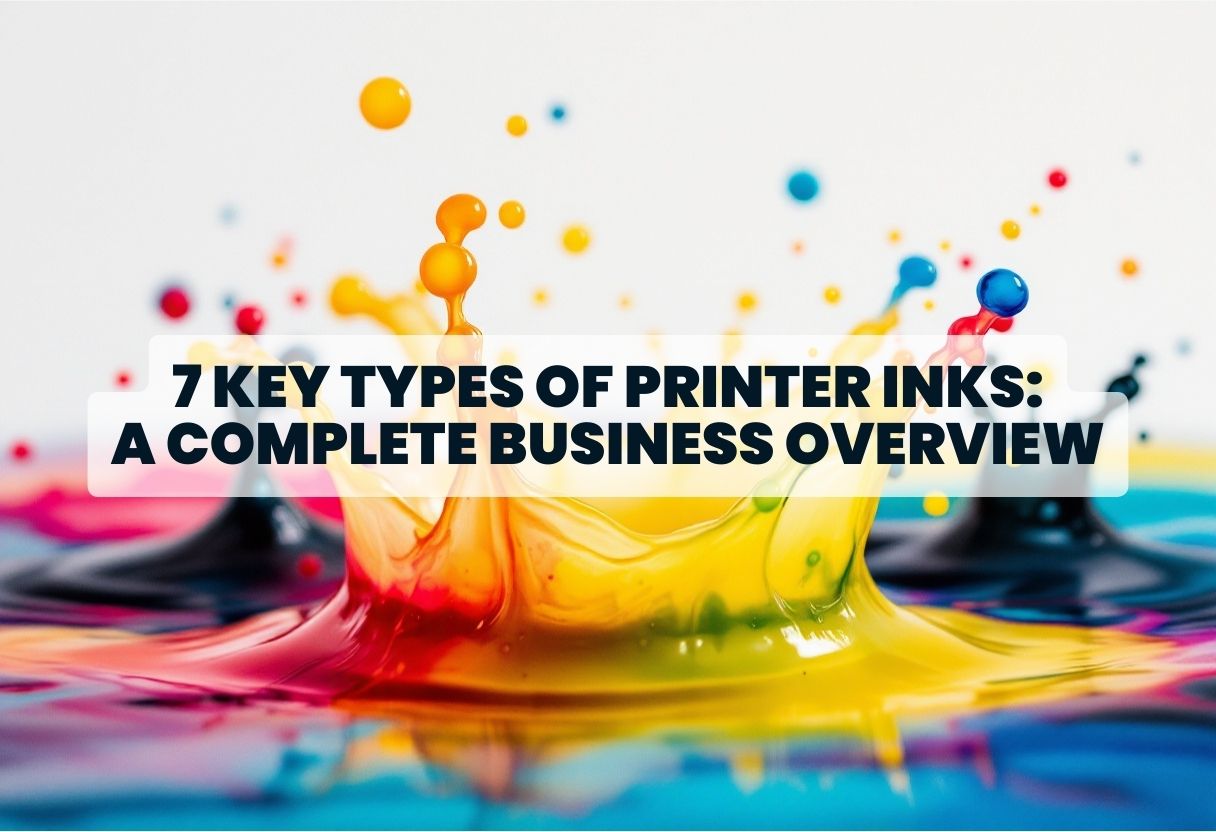
Modern printing relies on seven distinct ink types that serve different business needs. You’ll find solvent inks perfect for outdoor durability, while eco-solvent options offer a greener alternative. Aqueous inks come in two varieties: dye-based for vibrant colors and pigment-based for longevity. UV-curable inks provide instant drying on various materials, and latex inks offer excellent scratch resistance. For fabric printing, textile inks include sublimation, DTG, and DTF technologies. Understanding these options helps you choose the right ink for your specific application – let’s investigate each type’s unique advantages.
Key Takeaways
- Solvent inks offer exceptional durability for outdoor applications, lasting 3-5 years with strong adhesion to vinyl and PVC materials.
- Eco-solvent inks provide environmentally friendly printing with minimal VOCs while maintaining quality for both indoor and outdoor use.
- Aqueous inks come in dye-based (vibrant colors) and pigment-based (durable) varieties, suited for different professional printing needs.
- UV-curable inks instantly dry under ultraviolet light and work on multiple substrates, including glass, metal, and plastic.
- Textile inks, including sublimation, DTG, and DTF, offer specialized solutions for fabric printing with varying durability and texture benefits.
Solvent Inks
While solvent inks contain volatile organic compounds (VOCs), they’re among the most durable printing solutions available today. You’ll find these inks excel in creating vibrant, long-lasting prints that can withstand harsh outdoor conditions.
Let’s investigate the impressive ink properties that make solvent inks stand out. Your prints will resist fading, water damage, and UV exposure – making them perfect for outdoor applications.
You might wonder about print durability. These inks chemically bond with your substrate, creating prints that can last 3-5 years outdoors without lamination.
When it comes to outdoor printing, you’ll appreciate how solvent inks maintain their clarity on billboards, vehicle wraps, and mesh banners. They’re your go-to choice for any project that faces the elements.
Have you noticed how some outdoor signs stay vibrant for years? That’s the power of solvent ink technology at work. You’ll get exceptional adhesion on vinyl, PVC, and other materials.
Moving on to practical applications, you’ll find these inks compatible with many popular printer brands like Canon and Epson. Just remember to provide proper ventilation when using them due to their VOC content.
Eco-Solvent Inks
Although traditional solvent inks dominate the market, eco-solvent inks have emerged as a more environmentally conscious alternative. You’ll find they release fewer VOCs while maintaining excellent ink adhesion on various materials.
Let’s investigate how this printer ink technology works. The eco-friendly solvents carry pigments that penetrate surfaces more gently than their traditional counterparts.
You might wonder about their practical applications. These inks excel in both indoor and outdoor settings, from vehicle wraps to retail displays.
Have you ever noticed how some prints smell strongly? That’s not an issue here. Eco-solvent inks produce minimal odor, making them perfect for indoor environments.
Moving on to durability, you’ll be pleased to know these inks resist fading, scratches, and water damage. They’ll keep your prints looking fresh for years.
The best part? You won’t need specialized ventilation systems like you do with traditional solvent inks. This makes setup costs more manageable for your business.
You can pair these inks with popular printer brands like Roland, Mimaki, and Mutoh. Just verify your printer model supports eco-solvent technology before making the switch.
Aqueous Inks – Dye Ink
Beyond eco-solvent options, dye-based aqueous inks offer a different approach to printing needs. You’ll find these water-based solutions deliver exceptional vibrancy that’ll make your prints pop.
Let’s investigate how dye-based inks work with your projects. These inks dissolve completely in water, creating smooth color transitions and sharp details in your prints.
You might wonder about the best applications for aqueous inks. They’re ideal for indoor printing where color accuracy and image quality are essential.
Have you ever noticed how photos printed with dye-based inks seem to glow? That’s because the dye molecules penetrate the paper’s surface, creating rich, vibrant colors.
Moving on to print quality, you’ll appreciate the fine detail these inks provide. They’re perfect for marketing materials, photo prints, and presentation graphics.
Here’s what makes dye-based inks stand out:
- Superior color vibrancy
- Excellent shadow detail
- Sharp text reproduction
- Quick drying time
You’ll need to evaluate their limitations though. These inks aren’t waterproof and may fade when exposed to direct sunlight, so they’re best suited for controlled indoor environments.
Similar to Hongsam sublimation ink, these dyes must typically be used within a specific timeframe after opening to maintain optimal performance.
Aqueous Inks – Pigment Ink
Pigment-based aqueous inks represent a distinct shift from their dye-based counterparts. You’ll find these inks contain tiny solid particles suspended in water rather than dissolved colorants.
Let’s investigate why businesses are increasingly choosing pigment-based inks for their printing needs. These inks offer superior durability and fade resistance compared to dye-based alternatives.
You might wonder about the color gamut of pigment-based inks. While they may not match the vibrancy of dye inks, they’ll give you deeper blacks and more accurate color reproduction.
The ink applications for pigment-based formulations are particularly impressive in professional settings. You can count on them for archival documents, outdoor signage, and fine art prints.
Moving on to longevity, your prints will maintain their quality for decades when stored properly. Think of pigment particles as tiny armor-clad warriors protecting your images from UV damage and moisture.
Have you noticed how museum-quality prints always look crisp? That’s because they’re typically produced using pigment-based aqueous inks.
You’ll find these inks excel in situations where image permanence matters more than maximum color pop. They’re your go-to choice for professional photography and corporate documentation.
UV Curable Inks
UV curable inks represent a remarkable advancement in printing technology. You’ll find these innovative inks transforming the wide format printing industry with their unique curing process and versatility.
Let’s examine how UV curable inks work. When exposed to ultraviolet light, these inks instantly cure and solidify on your substrate through a photochemical reaction.
You might wonder about substrate compatibility. UV curable inks can print on an impressive range of materials including glass, metal, plastic, and wood.
Have you ever noticed how some prints seem to pop right off the surface? That’s because UV inks sit on top of the substrate rather than absorbing into it.
The ink curing process happens in milliseconds. You’ll get near-instant results without waiting for drying time or dealing with harmful VOCs.
Moving on to durability, your prints will resist scratching, fading, and weathering. They’re perfect for both indoor and outdoor applications.
You’ll appreciate these practical benefits:
- Immediate handling after printing
- Excellent color vibrancy
- Superior adhesion to multiple surfaces
- Environmentally friendly production
- Minimal waste and clean operation
The initial investment might be higher, but you’ll save time and resources in the long run.
Latex Inks
While UV inks shine in rapid curing, latex inks offer their own set of advantages in the printing world. You’ll find these innovative water-based solutions transforming digital printing with their remarkable versatility.
Let’s investigate why latex inks have become a game-changer in large format printing. They’re incredibly safe to handle and don’t require special ventilation systems like solvent-based alternatives.
You might wonder about their performance. These inks deliver scratch-resistant prints that stretch without cracking – perfect for vehicle wraps and flexible banners.
Moving on to environmental benefits, you’ll appreciate that latex inks are odorless and emit virtually no VOCs. That means you can install prints immediately without waiting for off-gassing.
Have you ever noticed how some prints fade quickly outdoors? Not with latex inks. They’re UV-resistant and can last up to three years without lamination.
The ink safety profile of latex technology makes it ideal for sensitive environments like hospitals and schools. You won’t need to worry about harmful fumes or chemical exposure.
Your prints will be both eco-friendly and durable. These inks work on coated and uncoated materials, from wallpaper to textiles, giving you endless creative possibilities.
Textile Inks (Sublimation, Direct-to-Garment (DTG), Direct-to-Fabric (DTF))
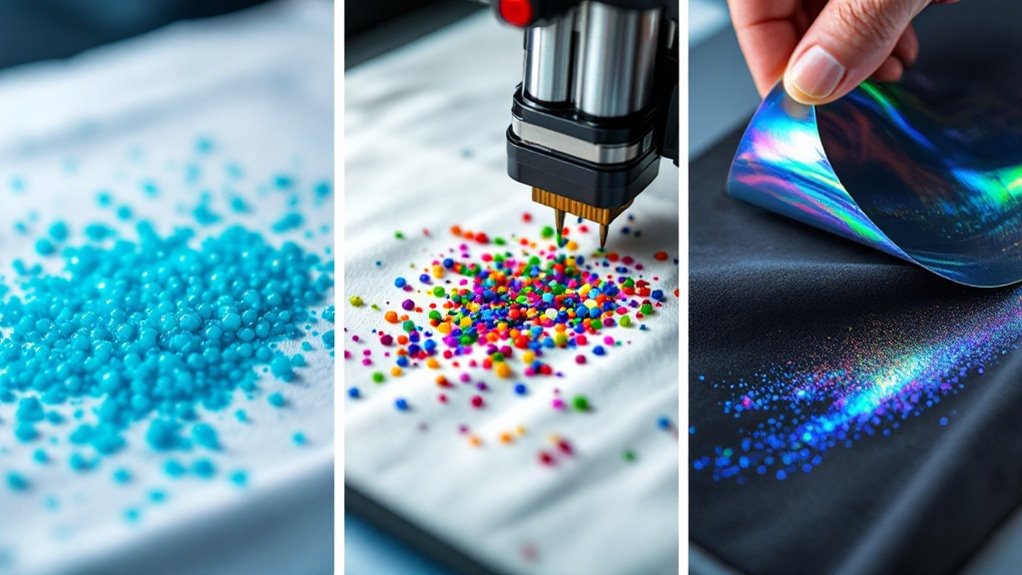
Textile printing has evolved dramatically with three distinct ink technologies leading the way: sublimation, DTG, and DTF.
You’ll find dye-sublimation inks are perfect when you’re working with polyester fabrics. These inks transform from solid to gas under heat, permanently bonding with the fabric’s fibers.
Let’s examine direct-to-garment (DTG) printing. You’re able to print directly onto cotton and cotton-blend fabrics with stunning detail and vibrant colors.
Moving on to direct-to-fabric (DTF), you’ll discover it’s the newest innovation in textile inks. It’s like having the best of both worlds – you can print on virtually any fabric type.
Have you ever noticed how different fabrics need different approaches? That’s where these technologies shine. Each has its sweet spot:
Sublimation works best for sportswear and promotional items. You’ll get incredible durability and wash-resistance.
DTG is your go-to for custom t-shirts and small batch orders. The prints feel soft and natural against the skin.
DTF offers amazing versatility for both natural and synthetic fabrics. You’ll appreciate its strong adhesion and stretch properties.
Modern sublimation printers like the PrecisionCore MicroTFP technology can achieve printing speeds up to 63.4 meters per hour.
Now you can choose the right textile ink technology based on your specific printing needs and fabric types.
Conclusion
Understanding printer inks requires recognizing their diverse applications and characteristics. Digital printing ink types have evolved to meet modern business needs.
Each ink category serves specific purposes, from solvent inks’ durability to eco-solvent’s environmental benefits. The textile pigment inks have transformed fabric printing.
When selecting ink, consider your primary applications, budget, and environmental concerns. Focus on the key factors: durability, color vibrancy, substrate compatibility, and cost-effectiveness.
Stay informed about emerging ink technologies, as the printing industry continues to evolve. Your printing success depends on choosing the right ink technology for your needs.
Want to enhance your textile printing? Discover how PrecisionCore technology can transform your business.
Frequently Asked Questions
How Long Does Each Type of Ink Typically Last in Storage?
Just like fine wines aging differently, your ink shelf life varies: solvent inks last 1-2 years, eco-solvent 1-3 years, aqueous 6-12 months, UV-curable 1 year, latex 1 year, and textile inks 6-12 months.
Can Different Ink Types Be Mixed Together for Custom Applications?
You shouldn’t mix different ink types together, as they’re chemically incompatible and could damage your printer or create unstable prints. Instead, investigate pre-formulated specialty inks designed for your specific custom applications.
Which Printer Ink Type Offers the Best Value for Money?
You’ll find eco-solvent inks offer the best value, balancing cost with durability and versatility. They’re cheaper than UV inks, more durable than aqueous options, and deliver excellent print quality across diverse applications.
How Often Should Printer Maintenance Be Performed for Each Ink Type?
You’ll need to clean solvent printers monthly, eco-solvent bi-weekly, aqueous weekly, UV curable bi-monthly, and latex printers every two weeks. Regular nozzle checks and printhead maintenance are essential for all types.
What Are the Average Drying Times for Different Types of Inks?
You’ll find UV inks cure instantly, solvent inks take 12-24 hours, eco-solvent 4-8 hours, latex inks dry in minutes, aqueous inks 15-30 minutes, and textile inks vary based on post-processing requirements.