Understanding Transfer Paper in Sublimation Printing
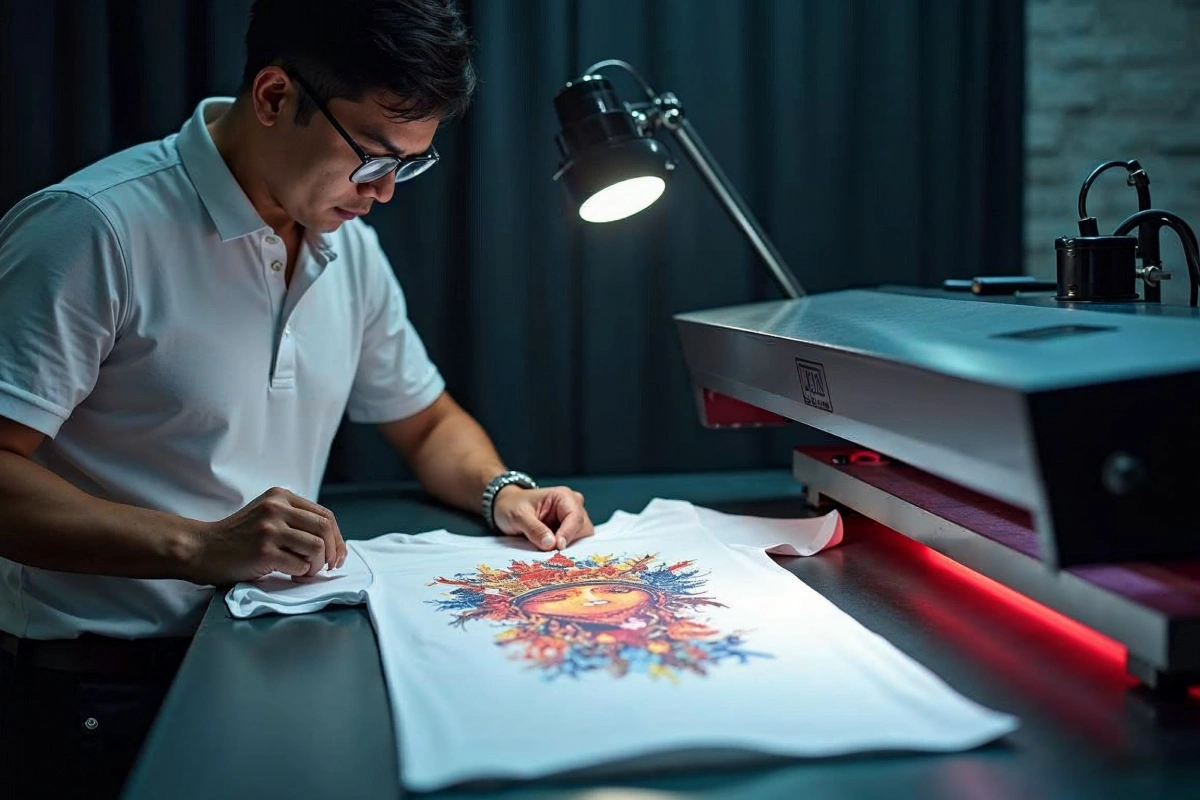
Transfer paper is your essential tool for sublimation printing, featuring a specialized coating that temporarily holds designs before heat application. You’ll need to choose between Fast Dry or Sticky varieties based on your project needs.
The paper’s unique silica and binder coating transforms your printed designs into gas during heating, creating permanent bonds with your target materials. When you’re printing, use the highest quality settings and mirror your images for correct orientation.
You’ll find a variety of sizes, allowing you to handle everything from small, customized items to large format projects. Understanding the basics opens up endless creative possibilities.
Key Takeaways
- Transfer paper contains specialized coatings of silica and binder that enable designs to transform into gas during heat application.
- Heat application causes printed designs on transfer paper to permanently bond with target materials through sublimation process.
- Images must be printed in mirror format on transfer paper to ensure correct orientation on the final product.
- Fast Dry and Sticky transfer papers offer different advantages, with Fast Dry allowing immediate handling and Sticky preventing design shifts.
- Transfer paper must match printer type specifically for sublimation printing and requires highest quality printer settings for optimal results.
What is Transfer Paper?

Three key features define transfer paper in sublimation printing: its specialized coating, its role as a temporary medium, and its ability to transfer designs through heat application.
When you’re working with transfer paper for sublimation printing, you’ll notice it looks similar to regular paper but has a special coating made of silica and binder. This coating is what makes the magic happen during the transfer process.
Think of dye-sublimation paper as your design’s temporary home. It’s engineered to hold your artwork until you’re ready to apply heat and pressure. The coating transforms your printed designs into gas, which then permanently bonds with your target material.
You’ll find the paper’s surface feels slightly different from standard paper – that’s the specialized coating that guarantees your designs transfer perfectly every time.
The Uses of Transfer Paper
When you’re ready to print your designs, transfer paper serves as your essential intermediary surface before applying images to fabrics and merchandise.
You’ll find transfer paper lets you print complex patterns with ease, holding the design temporarily until heat application moves it to your final material.
Your printing success depends on choosing the right transfer paper type, as it’ll help you achieve vibrant colors and sharp details on various surfaces.
1. Printing Designs or Images
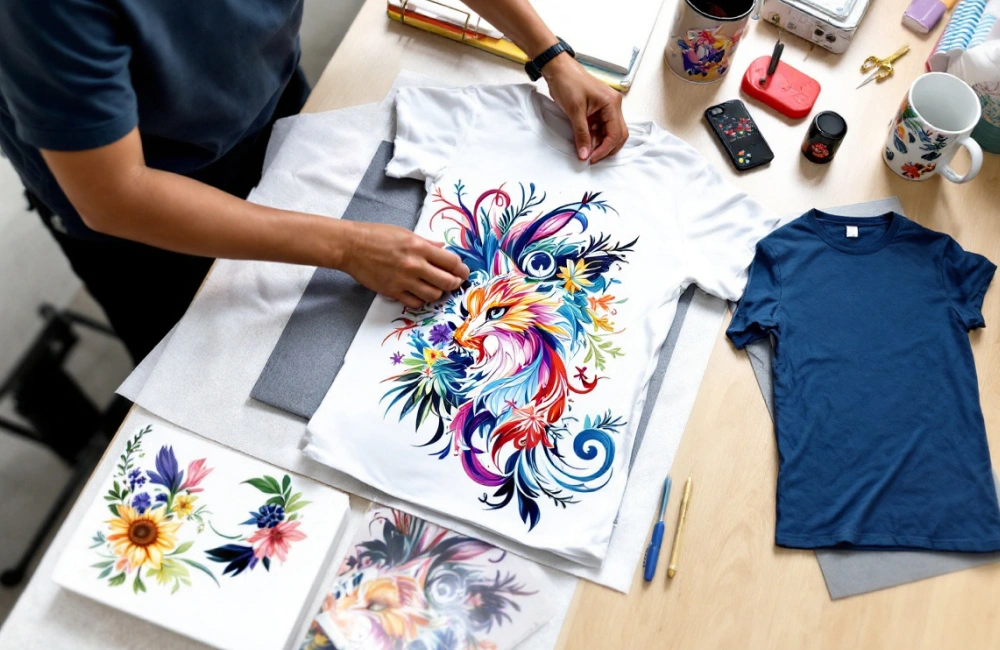
Transfer paper serves as an essential intermediary in the sublimation printing process, allowing you to print designs and images before transferring them to your final product. You’ll find that sublimation transfer paper works best when you print your designs at the highest quality settings your printer offers.
When you’re ready to print, make certain your image is mirrored – this guarantees it’ll appear correctly on your finished product. You’ll want to let your prints dry completely before handling them to prevent smudging.
For the best image transfer results, keep your transfer paper stored flat in a cool, dry place. Remember to check your printer’s compatibility with your paper type – inkjet papers won’t work in laser printers and vice versa.
2. A Practical Transfer Medium

Versatility makes sublimation transfer paper an indispensable tool for crafters and businesses alike. You’ll find this practical transfer medium essential for transforming your digital designs into stunning physical products.
When you’re working with transfer paper, you’ll appreciate how it serves as the perfect intermediary between your printer and final materials. You can easily apply designs to mugs, t-shirts, phone cases, and countless other items.
Heat transfer paper gives you the flexibility to work with both 2D and 3D surfaces. You’ll notice how it maintains color vibrancy without requiring multiple application layers. The paper’s special coating guarantees your designs transfer smoothly and accurately every time.
This versatile medium lets you experiment with different materials while maintaining professional-quality results in your creative projects.
3. Facilitating the Printing Process

Beyond its role as a transfer medium, sublimation paper streamlines the entire printing process for both beginners and professionals. You’ll find it’s remarkably versatile, letting you print on everything from t-shirts to coffee mugs with consistent results.
When you’re working with fast dry transfer paper, you won’t need to wait between printing and application. This means you can move quickly through multiple projects without worrying about smudging or damage. If you’re handling complex designs, sticky transfer paper gives you improved control by gripping your materials firmly.
You’ll appreciate how transfer paper adapts to different surfaces. Whether you’re printing on flat fabrics or curved merchandise, the paper’s coating guarantees your designs transfer completely and vividly. It’s like having a reliable assistant that makes certain every print comes out just right.
Types of Transfer Paper
When you’re choosing transfer paper, you’ll find two main types: Fast Dry and Sticky.
Fast Dry transfer paper lets you handle your prints right away without smudging or damage, making it perfect for quick turnaround projects.
Sticky transfer paper has a special adhesive texture that grabs onto ink better, which means you’ll get sharper, more vibrant prints on your finished products.
1. Fast Dry
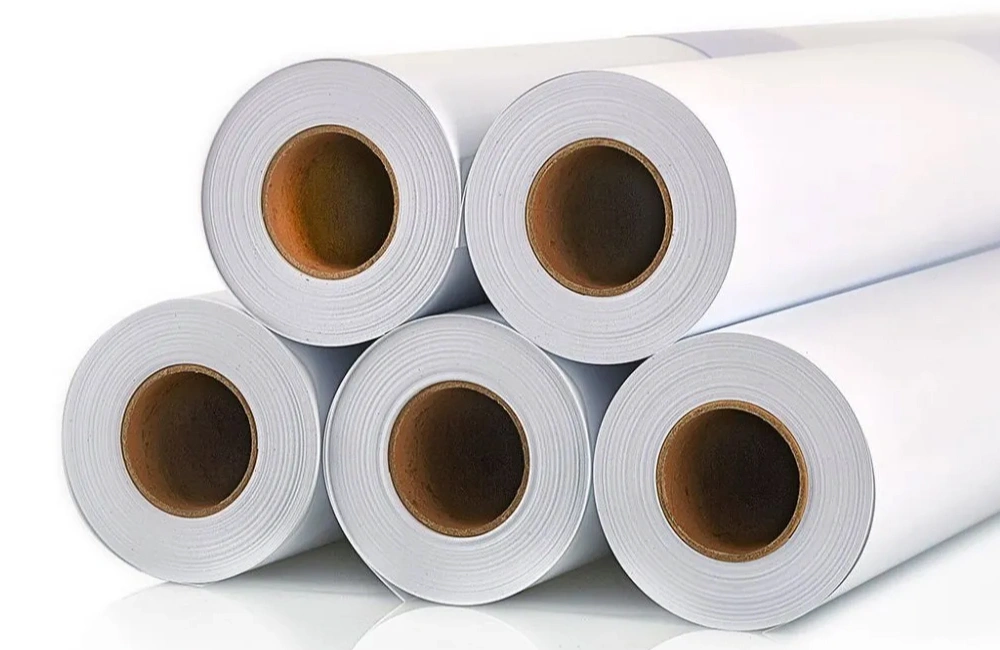
Although many types of transfer paper exist, Fast Dry transfer paper stands out for its quick-drying properties that prevent smudging and bleeding during the printing process. You’ll find this essential printing supply particularly valuable when you’re working on time-sensitive projects.
When you’re running a busy sublimation printing process, you won’t need to wait long between printing and application. The special coating on Fast Dry paper allows ink to set almost instantly, letting you handle your transfers immediately after they emerge from your printer.
You’ll appreciate how Fast Dry paper maintains crisp, clean lines and vibrant colors. Its rapid-drying technology means you can stack your prints without worrying about transfer or ghosting effects. This efficiency makes it ideal for high-volume production runs where time is critical.
2. Sticky
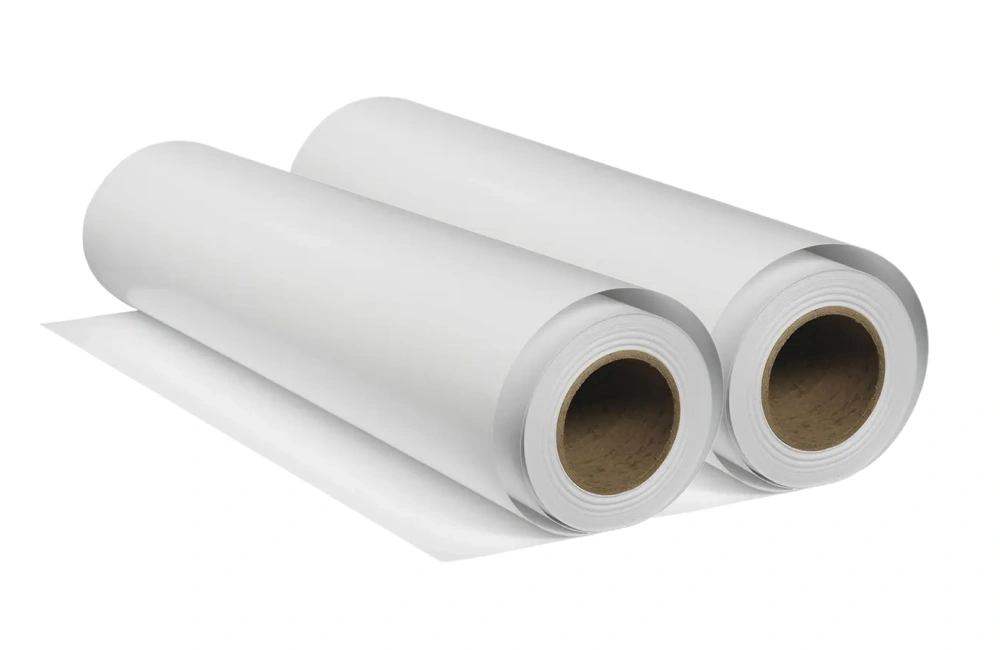
Unlike Fast Dry paper’s quick-setting properties, Sticky transfer paper offers a different advantage through its specialized adhesive coating. You’ll notice its unique texture that helps grip sublimation blanks more effectively during the printing process.
When you’re working with challenging print media, Sticky transfer paper’s adhesive properties prevent design shifting and misalignment. The paper’s surface contains a special coating that grabs onto ink particles, ensuring crisp, clean transfers every time.
You’ll find this type particularly useful when dealing with curved or irregular surfaces. Its flexible nature allows you to achieve consistent coverage without worrying about air bubbles or uneven application. The sticky coating also helps maintain color vibrancy by keeping the design firmly in place throughout the heat transfer process.
Transfer Paper Sizes

Not only do they come in various types, but transfer papers also vary in size.
There are thin and thick ones. The thin ones are much more affordable, while the thick ones are more expensive.
However, being thin doesn’t necessarily mean poor quality, and being thick doesn’t guarantee superiority either.
Thick and thin transfer papers are used according to the conditions or printing needs.
The weight of transfer paper is measured in GSM (grams per square meter), also known as grammage.
The lightest transfer paper is 35 GSM, and the heaviest is 100 GSM. To save on production costs, you can use 35 GSM transfer paper.
However, with this thin grammage, it must be complemented with high-density ink to ensure good quality results.
But before that, make sure first that your printer can handle it.
Conclusion
Just like a chef needs the right ingredients to create a masterpiece, you’ll need quality transfer paper to achieve stunning sublimation prints.
Think of transfer paper as your recipe’s secret ingredient – it can make or break your final product.
Whether you’re working with fabrics or hard surfaces, you’ve now got the knowledge to choose the right paper for your projects. Let those vibrant designs shine through with confidence.
To further enhance your business profits, don’t miss our article on “Top 10 Jersey Fabric Types Ideal for Sublimation Print”