6 Best DTF Printer Inks for Your Printing Business
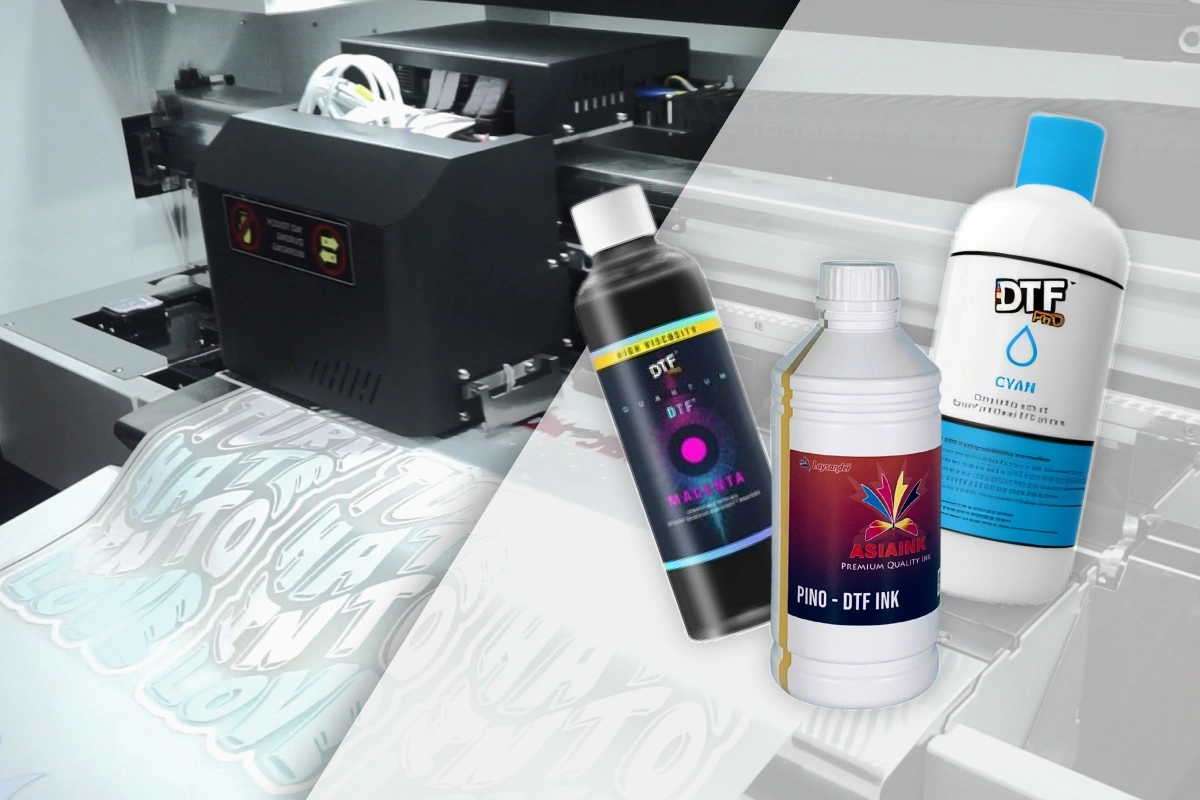
When you’re looking for top-quality DTF printer inks, you’ll want to take into account industry leaders like Xinier, Pino, DTFPRO®, and Subli Star.
These brands offer superior formulations with excellent wash-fastness, vibrant colors, and reliable compatibility across various fabric types.
You’ll find Xinier’s dual-variant system perfect for different business needs, while DTFPRO®’s OEKO-TEX certified inks guarantee eco-friendly printing. Pino’s quick-drying formulation and Subli Star’s fine particle size deliver exceptional print quality.
With costs ranging from $0.08 to $0.12 per ml, these inks provide the perfect balance of quality and value. Let’s investigate each option’s unique features in detail.
Key Takeaways
- DTFPRO® DTF Ink delivers wide compatibility with Epson printers and OEKO-TEX certification, making it ideal for eco-conscious businesses.
- Quantum DTF® V2 Ink features nano-pigment technology and encapsulated resin for superior color vibrancy and 12-month shelf life.
- Pino DTF Ink’s quick-drying, water-based formulation offers excellent adhesion across materials with dual oven functionality.
- Subli Star DTF Ink provides four variants with sub-300nm particle sizes, ensuring fine line detail and printer component protection.
- Xinier DTF Printer Ink offers both Economy and Premium options with high pigment load for different business budget requirements.
1. Xinier DTF Printer Ink
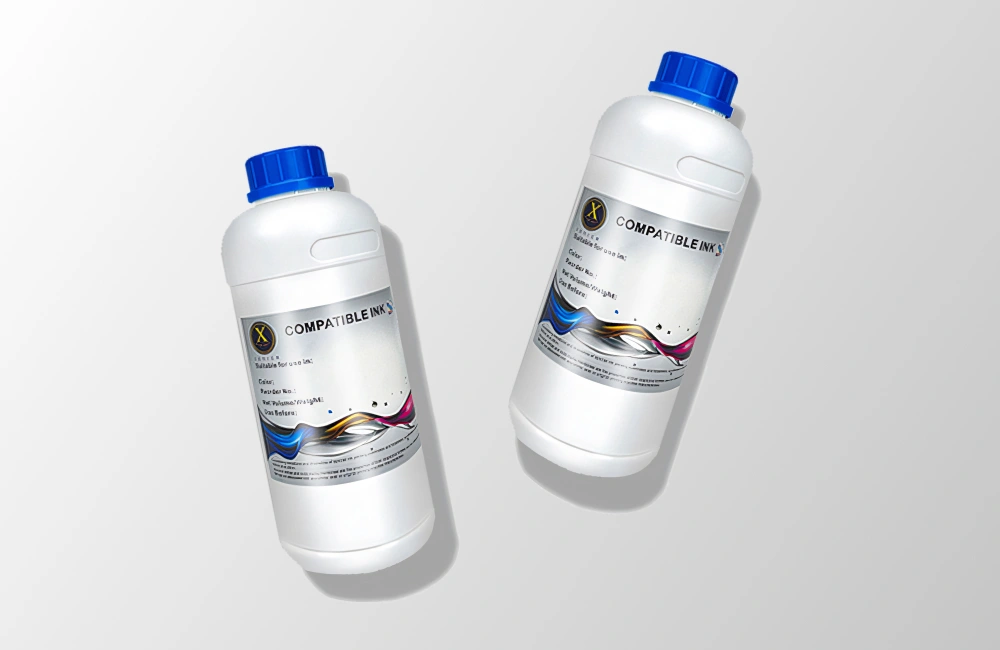
Among the top choices for DTF printing, Xinier DTF Printer Ink stands out with its dual-variant offering for large-format printers. It provides both Economy and Premium options, catering to businesses at different stages.
Let’s investigate what makes Xinier one of the best DTF printing inks in the market. Their high pigment load guarantees your prints pop with vibrant colors and deep saturation.
You might wonder about durability – that’s where Xinier shines. The ink resists wear, washing, and fading while maintaining excellent adhesion to PET films and various substrates. The gravity sensor system ensures even distribution of ink during the printing process.
Moving on to efficiency, you’ll appreciate the smooth viscosity that prevents clogging and guarantees consistent flow through your Epson printheads. The fast-drying formula keeps your production running smoothly. Official warranty coverage ensures peace of mind for your printing operations.
For cost-conscious print shops, the Economy variant offers CMYK, White, and Flush inks at Rp 240,000/kg. If you’re ready to level up, the Premium variant delivers improved color accuracy and stability.
Your environmental footprint matters too. Xinier’s eco-friendly formulation helps reduce environmental impact without compromising print quality or durability.
Want reliable performance? The ink’s 1000ml bottles guarantee you’ve got plenty of capacity for large-format printing jobs.
2. Pino DTF Ink
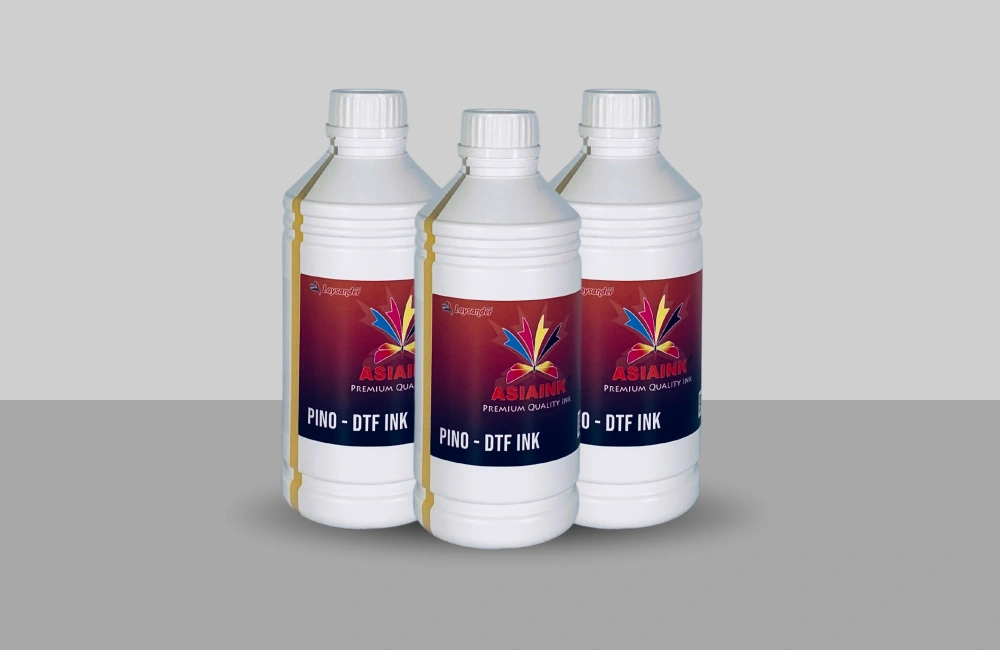
As a top contender in the DTF ink market, Pino DTF ink delivers exceptional value through its pigment-based formulation that prevents clumping and guarantees quick heat-press drying. You’ll find this ink particularly effective when paired with compatible Epson XP 600 and I3200 double printheads.
Let’s investigate what makes Pino DTF ink stand out for fabric printing. The water-based formulation guarantees vibrant colors while maintaining eco-friendly standards. The dual oven function ensures optimal drying results for high-speed production.
A precise temperature control range of 0-399°C helps achieve consistent results across all prints. You’ll appreciate its consistent print quality and excellent adhesion across various materials.
Moving on to practical benefits, you’re getting impressive wash resistance without color fading. The ink’s optimized viscosity enables smooth printing performance while reducing maintenance headaches.
You might wonder about compatibility – Pino’s got you covered. This ink works seamlessly with popular RIP software for precise color management. Plus, it’s available in various capacities to match your production needs.
Have you noticed how some inks struggle with different fabrics? Not Pino. Whether you’re printing on cotton, polyester, or blended materials, you’ll achieve professional results every time. The quick-drying formula keeps your production moving efficiently while maintaining those crisp, vibrant prints your customers demand.
3. DTFPRO® DTF Ink
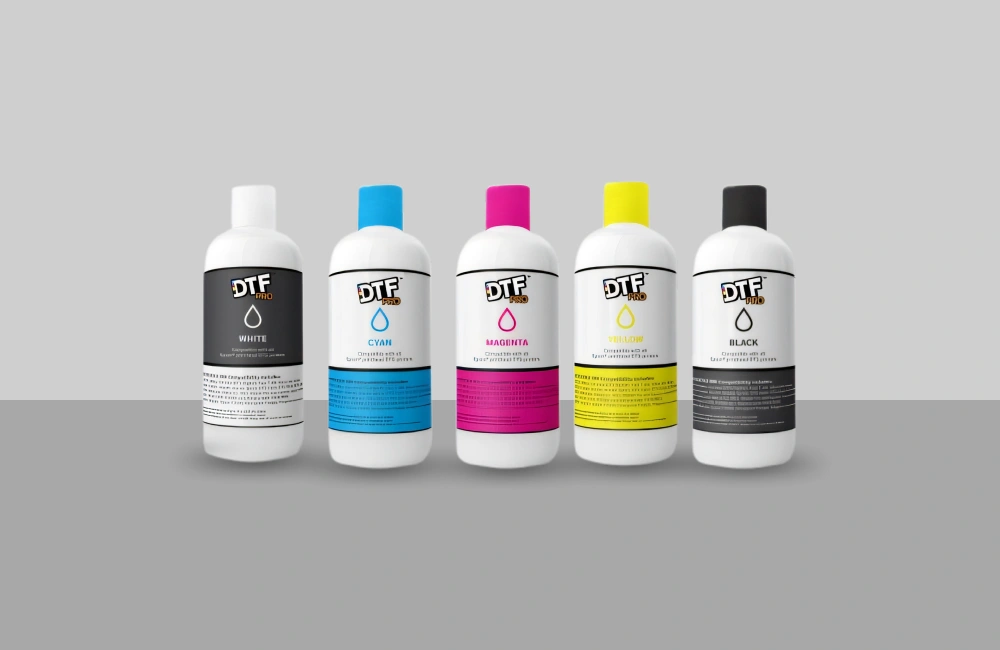
While Pino DTF ink excels in clump resistance, DTFPRO® DTF ink takes performance to new heights with its advanced water-based pigment formulation. This innovative ink transforms the dtf transfer process with its encapsulated resin and nano-pigment technology.
You’ll appreciate how DTFPRO® streamlines your printing workflow with its exceptional compatibility across all Epson DTF printers. The ink’s unique formulation delivers outstanding results on both light and dark fabrics.
Let’s investigate what makes DTFPRO® stand out from the competition:
- White Plus ink’s thicker consistency requires less volume while maintaining solid coverage
- Superior color stability guarantees consistent output during long print runs
- Improved wash resistance prevents color loss even after multiple washes
- Versatile application on cotton, polyester, and blended fabrics
You’ll need to maintain proper storage conditions between 10-30°C with 40-80% humidity to maximize shelf life. Your colored inks will last 12 months, while the White Plus variant remains viable for 6 months. The ink’s OEKO-TEX certification gives you peace of mind about safety and environmental responsibility.
4. Sublistar DTF Ink
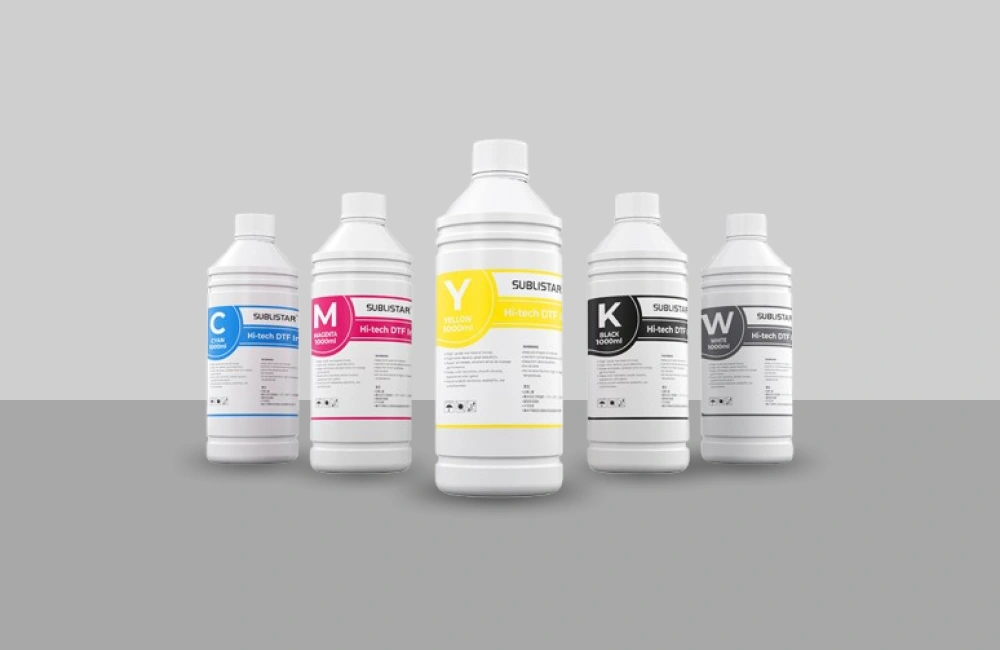
When choosing premium DTF inks for your large format printer, Sublistar’s comprehensive lineup stands out with its four distinct variants: Hi-One, Hi-Tech, Hi-Pro, and Transparent.
You’ll appreciate that this water-based pigment ink delivers exceptional performance with particle sizes under 300nm. This means you’ll get incredibly fine printed lines and perfect color gradients.
Let’s investigate what makes this ink special. With a washing fastness grade of 4-5 and light fastness of 5-6, your prints will maintain their vibrancy through multiple washes.
The ink’s versatility is impressive. You can print on everything from cotton and polyester to spandex and denim with consistent results.
Moving on to technical specs, you’ll find the pH-neutral formula protects your printer’s metal components from corrosion. Plus, there’s no need to worry about harmful substances – it’s 100% environmentally safe.
Have you ever noticed how some inks clog during continuous printing? Sublistar’s excellent fluency eliminates that concern. You’ll experience uninterrupted printing without ink breakage, making your production more efficient.
For best results, store your ink in a cool place away from direct sunlight. With proper storage, you’ll enjoy a 12-month shelf life.
5. Quantum DTF® V2 DTF Ink
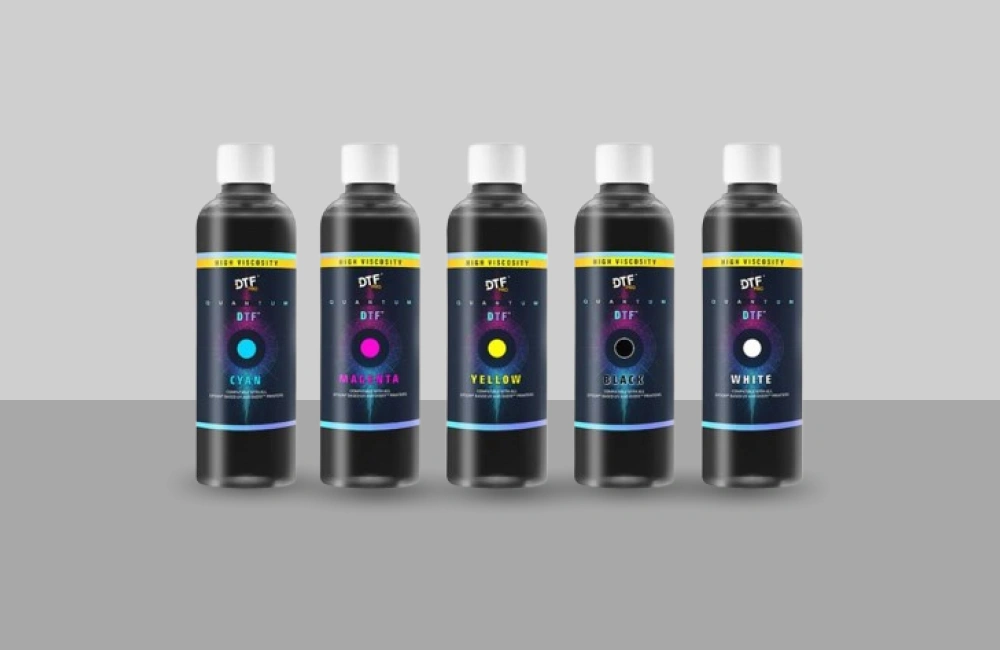
The Quantum DTF® V2 ink transforms large-format printing with its encapsulated resin and nano-pigment technology. You’ll experience superior color vibrancy and minimal clogging thanks to its innovative zirconium cut dispersion process.
When you’re seeking professional printing inks that deliver exceptional results, Quantum DTF® V2 stands out with these features:
- Exceptional washfastness for durable, long-lasting prints
- Wide compatibility with Epson printheads including XP600, 4720, and I3200
- Perfect color consistency from batch to batch
- Advanced nano-pigment technology for reduced ink consumption
Let’s investigate the environmental requirements for peak performance. You’ll need to maintain humidity between 55-75% and temperature between 75-80°F to prevent ink clogs and film buckling.
When it comes to safety, make sure to work in a well-ventilated area and use proper protective equipment.
You might wonder about storage – keep your Quantum DTF® V2 ink in its original packaging for up to 12 months from manufacture. This guarantees you’ll maintain consistent print quality throughout your projects.
6. Sublistar Hi-Pro DTF Ink
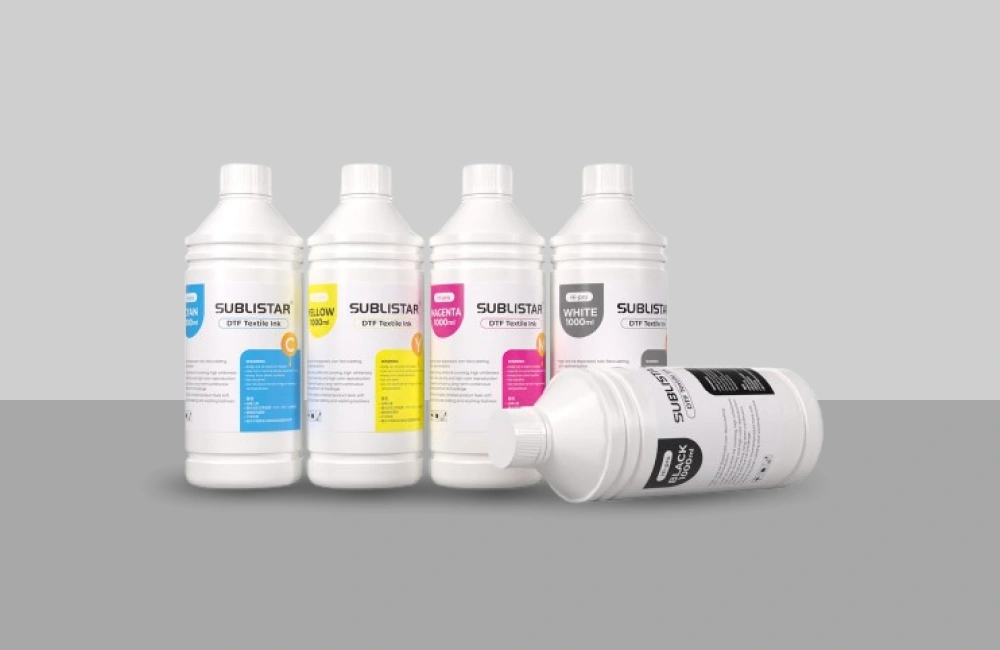
Another standout option in the DTF ink market is Sublistar Hi-Pro DTF ink, engineered for maximum color brilliance and print clarity. You’ll appreciate its innovative formula that eliminates the need for stirring or shaking before use.
When you’re running a direct-to-film printing business, you need reliability. This ink delivers with its advanced dispersant technology that prevents flocculation and sedimentation. You’ll experience smooth, continuous printing without worrying about clogged printheads.
The ink’s versatility is impressive. It works beautifully on everything from t-shirts to hoodies, with compatibility across polyester, cotton, and mixed fabrics. Your prints will maintain their vibrancy for 2-3 years, even in outdoor conditions.
Let’s talk technical specs. The ink works with Epson I3200, I1600, F1080, and 4720 printheads. You’ll get 1000ml per bottle and a solid 12-month shelf life.
What sets this ink apart is its environmental safety profile and quality control. Each batch undergoes thorough testing before leaving the factory, and you’re backed by a 24-month warranty. For consistent, professional results, this ink won’t let you down.
Color Performance
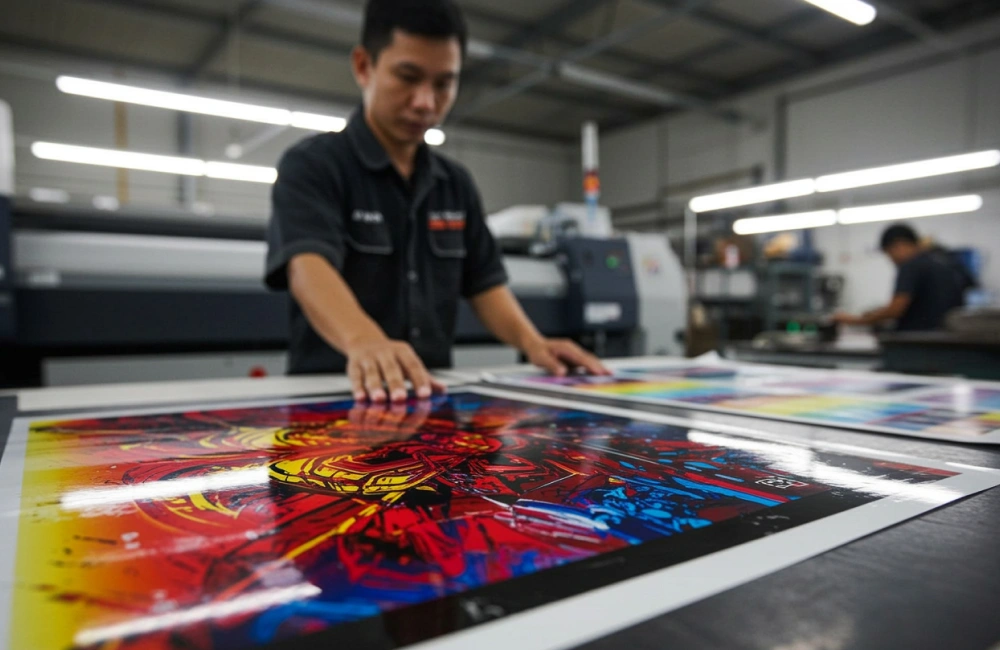
Color performance stands as an important factor in DTF printing success. You’ll want to guarantee your chosen ink delivers vibrant, accurate colors that maintain consistency across all your high-quality print transfers.
Let’s examine what makes DTF ink color performance truly outstanding:
- High-quality pigments with superior opacity that create rich, saturated colors even on dark fabrics
- Wide color gamut capabilities that accurately reproduce everything from subtle gradients to bold solid colors
- Consistent color matching that maintains brand integrity across multiple print runs
- Fade-resistant formulations that keep prints looking fresh even after repeated washing
You might wonder how to maximize your ink’s color performance. Start by maintaining ideal environmental conditions between 18°C-25°C with 40%-60% humidity.
Moving on to practical application, you’ll notice that proper color management is vital. Your prints should match your digital designs precisely.
Have you ever noticed how some DTF prints look muddy or washed out? That’s often due to poor ink quality. By investing in premium DTF inks, you’re guaranteeing your prints maintain their visual impact and professional appeal.
For example, Fedar DTF printer have an automatic ink stirring system helps prevent clogging while ensuring consistent color distribution throughout your printing process.
Durability Characteristics
Beyond creating visually striking prints, your DTF ink must withstand the demands of daily use. Let’s examine what makes durable printing ink vital for your business success.
Your prints need to resist UV exposure, scratches, and repeated washing cycles. High-quality DTF inks offer exceptional fade resistance and maintain their vibrancy even after multiple washes.
You’ll want to evaluate the ink’s adhesion properties, which directly impact how well your designs stick to different fabrics. The right combination of ink and adhesive powder guarantees your prints won’t crack or peel.
Have you ever noticed how some prints look perfect initially but deteriorate quickly? That’s why proper heat transfer settings are essential. Your ink should maintain its integrity under various temperature and pressure conditions.
Moving on to material compatibility, you’ll need inks that work well with different fabrics. The best DTF inks bond effectively with cotton, polyester, and blended materials.
Quick-drying formulations can boost your productivity without sacrificing durability. Look for inks that offer both speed and lasting quality, especially when handling large-volume orders.
Remember to check certification standards. Washer and dryer-safe certifications give you confidence in your ink’s long-term performance.
Printer Compatibility
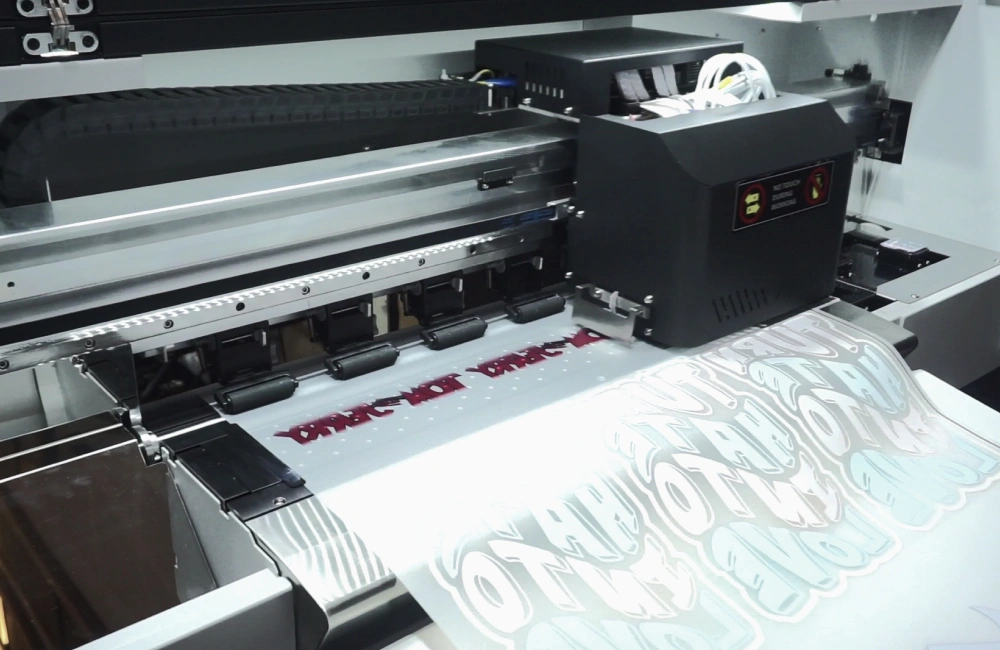
Since your DTF printer represents a significant investment, choosing compatible ink is essential for peak performance and longevity. You’ll want to focus on epson-compatible DTF inks that match your specific printer model.
Let’s investigate the key compatibility factors you should consider:
- Printhead specifications – match inks to your printer’s requirements (like Epson I3200/4720/XP600 printheads)
- Ink viscosity ratings that align with your printer’s specifications
- Chemical compatibility with your printer’s components and tubing
- Firmware compatibility to verify proper communication between ink and printer
You might wonder about mixing different ink brands. It’s best to stick with one manufacturer’s complete ink set to avoid compatibility issues.
Have you noticed how some DTF inks claim universal compatibility? Be skeptical of these claims. Always verify specific model compatibility before purchasing.
Moving on to maintenance, you’ll need regular firmware updates to maintain peak ink performance. This keeps your printer running smoothly with your chosen ink system.
Remember to check your printer’s warranty requirements. Some manufacturers only honor warranties when you use their recommended ink types.
Performance Metrics
When evaluating DTF printer inks, four essential performance metrics demand your attention: ink viscosity, absorption rate, drying time, and color accuracy.
Let’s investigate how viscosity affects your print quality. Your ink must flow smoothly through the printhead while maintaining proper droplet formation. Too thick or thin can lead to clogging or poor coverage.
You’ll want to verify your eco-friendly DTF ink absorbs into the film within 30-60 seconds. This prevents smudging and enables faster production speeds.
Moving on to drying time, quick-drying inks boost your productivity. Look for formulations that cure completely under heat press without compromising durability.
Have you noticed how some inks produce inconsistent colors? That’s why you need inks with superior color accuracy and rich saturation. Consider options like Sublistar Hi-Pro or DTFPRO® for their proven color performance.
Your ink should resist flocculation and sedimentation, maintaining stability during extended print runs. Advanced formulations like Quantum DTF® V2 use nano-pigment technology to prevent printhead clogging.
Remember to test your chosen ink’s wash resistance and UV protection capabilities. These factors directly impact your prints’ longevity.
Substrate Compatibility
The substrate compatibility of your DTF ink directly impacts print quality and durability. You’ll need to verify your ink works seamlessly with various materials for ideal results.
Let’s investigate the key factors you should consider when matching DTF inks to substrates:
- Material Composition: Different fabrics require specific ink formulations – cotton needs different properties than polyester for maximum dtf color accuracy
- Surface Preparation: Clean substrates free from oils and contaminants verify proper ink adhesion
- Environmental Conditions: Temperature and humidity affect how well ink bonds to materials
- Curing Requirements: Each substrate may need unique curing times and temperatures
You’ll want to test your DTF ink on sample materials before committing to large production runs. This helps confirm compatibility and durability.
Moving on to practical application, consider using manufacturer-recommended ink profiles for specific substrates. These profiles are tailored for the best results.
When working with specialty materials like vinyl or ceramics, you might need specialized DTF inks. Always check the manufacturer’s specifications before printing.
Remember that proper substrate preparation is just as important as ink selection. A clean, properly treated surface leads to better adhesion and more vibrant prints.
Cost Efficiency

Smart cost management requires careful evaluation of DTF ink expenses against their long-term value. You’ll want to balance quality and efficiency when selecting CMYK printing inks for your DTF printer.
Let’s examine the numbers that matter. The average DTF ink costs between $0.08 to $0.12 per ml, with typical print costs ranging from $0.50 to $1.50 per design.
You might wonder if premium inks are worth the investment. Higher-quality inks often reduce wastage and minimize downtime, making them more cost-efficient in the long run.
Consider bulk purchasing to maximize your cost efficiency. With a 1000ml ink bottle priced at $100, you can produce around 400 prints at just $0.25 each.
Have you noticed how maintenance impacts your bottom line? Set aside 10-15% of your printer’s purchase price annually for upkeep.
Moving on to value optimization, consider implementing refillable ink systems for high-volume printing. They’ll significantly reduce your per-print costs.
Remember to factor in all components when calculating profitability. Include ink, film, and adhesive powder costs in your pricing strategy.
Environmental Impact
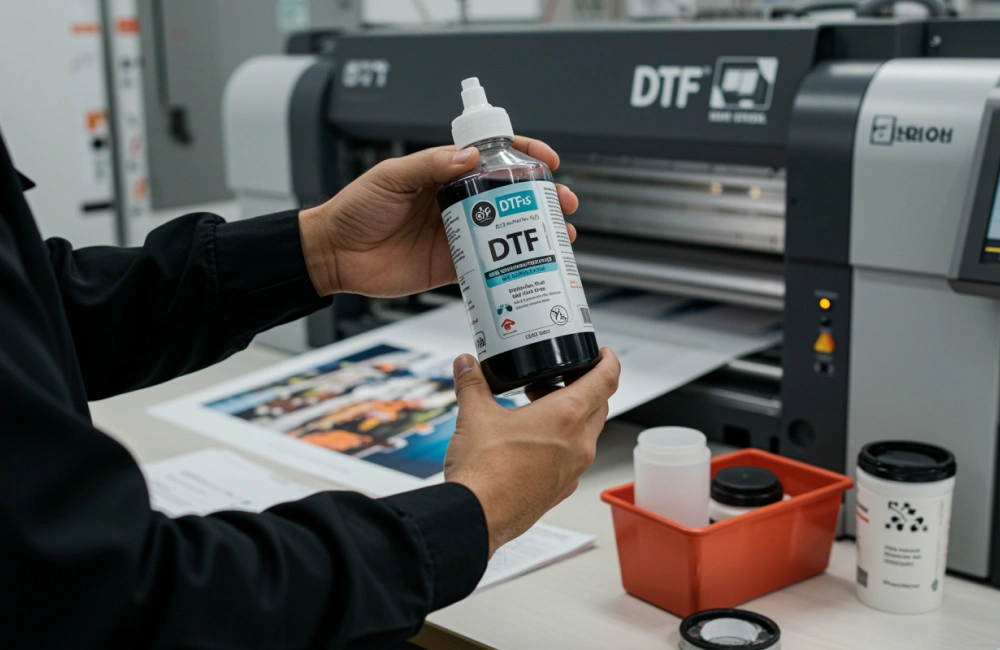
Making environmentally conscious choices in DTF printing starts with selecting eco-friendly inks that minimize harmful impacts. You’ll find that modern washfast DTF ink formulations prioritize sustainability without compromising print quality.
Let’s investigate how DTF inks contribute to environmental responsibility:
- Water-based compositions significantly reduce VOC emissions and eliminate harmful chemicals found in traditional printing methods
- Minimal waste production through efficient ink usage and reusable materials
- Lower energy consumption during the curing process compared to solvent-based alternatives
- OEKO-TEX and REACH certifications guarantee responsible manufacturing practices
You might wonder about the broader environmental impact of your printing business. DTF technology supports sustainable fashion initiatives by reducing wastewater production and resource consumption.
Moving on to practical benefits, you’ll appreciate that eco-friendly DTF inks are odorless and safer for your workspace. They’re designed to minimize your carbon footprint while maintaining excellent print durability.
Have you noticed the industry shift toward circular economy practices? By choosing environmentally conscious DTF inks, you’re not just protecting the planet – you’re positioning your business for the future of sustainable printing.
Conclusion
Selecting high-quality DTF printer inks plays a pivotal role in creating durable, vibrant prints that’ll satisfy your customers and boost your business’s reputation. Digital transfer printing success depends heavily on choosing the right ink formulation for your needs.
You’ll want to prioritize inks that offer excellent color performance and versatility across different fabric types. Consider how your chosen ink performs on both light and dark materials.
The perfect DTF ink for your business should balance cost-effectiveness with superior print quality. Look for inks with proven durability and wash-fastness ratings.
Remember that compatibility with your specific printer model is non-negotiable. The right ink will prevent costly maintenance issues and downtime.
Your investment in quality DTF inks will pay off through consistent results and happy customers. Focus on brands that offer comprehensive technical support.
Consider starting with smaller quantities to test performance before committing to bulk purchases. This approach helps you fine-tune your production process.
Would you like more in-depth recommendations? Book a FREE Business Consultation with our High-Calibre Business Consultants.
Frequently Asked Questions
How Often Should DTF Printer Ink Cartridges Be Replaced?
You’ll need to replace DTF printer cartridges based on your usage: frequently if printing daily, every other week for moderate use, or more often with infrequent printing to prevent clogs.
Can Different Brands of DTF Ink Be Mixed Together?
You’re playing with fire if you mix DTF ink brands! Different chemical formulations can destroy your printhead, cause severe clogging, and ruin print quality. Stick to one compatible brand.
What Causes White DTF Ink to Settle and Separate?
Your white DTF ink settles and separates due to poor maintenance, environmental factors like temperature and humidity changes, ink quality issues, and equipment problems with your printer’s components.
How Do I Properly Clean DTF Printheads to Prevent Ink Buildup?
Clean your printheads daily using lint-free cloths and isopropyl alcohol. Run automated cleaning cycles regularly, maintain proper room temperature and humidity, and don’t forget to wet cap between uses.
Can Expired DTF Ink Still Be Used for Printing?
You shouldn’t use expired DTF ink as it’ll cause clogging, poor print quality, and potential printhead damage. It’s not worth risking your equipment and final product’s quality.